In this guide 12 sections
- 1. Keep the job until the lawns outgrow it
- 2. Do the maths before you buy anything
- 3. Use the gear you already own
- 4. Take small lawns only
- 5. Build the round in one area
- 6. Get your first ten customers the cheap way
- 7. Set the price and the cycle at signup
- 8. Run it like a business from the first dollar
- 9. Know the number that means quit
- The pattern behind all nine
- Frequently asked questions
- Next step
A lawn mowing side hustle is the best small business I know of, and most people who try it quit inside a year for one reason. They price it like pocket money and run it like a favour.
Here is a bloke in my Facebook group asking the question the way everyone asks it:
“Been tossing the idea of starting a side gig of cutting grass after my full time job. Don’t really have a clue on how to start to get clients.”
And here is the thread that follows on every forum on the internet. Half the replies say it will not work. The other half know someone doing it. Somebody always says the margins are thin and somebody else always says it depends on whether the juice is worth the squeeze.
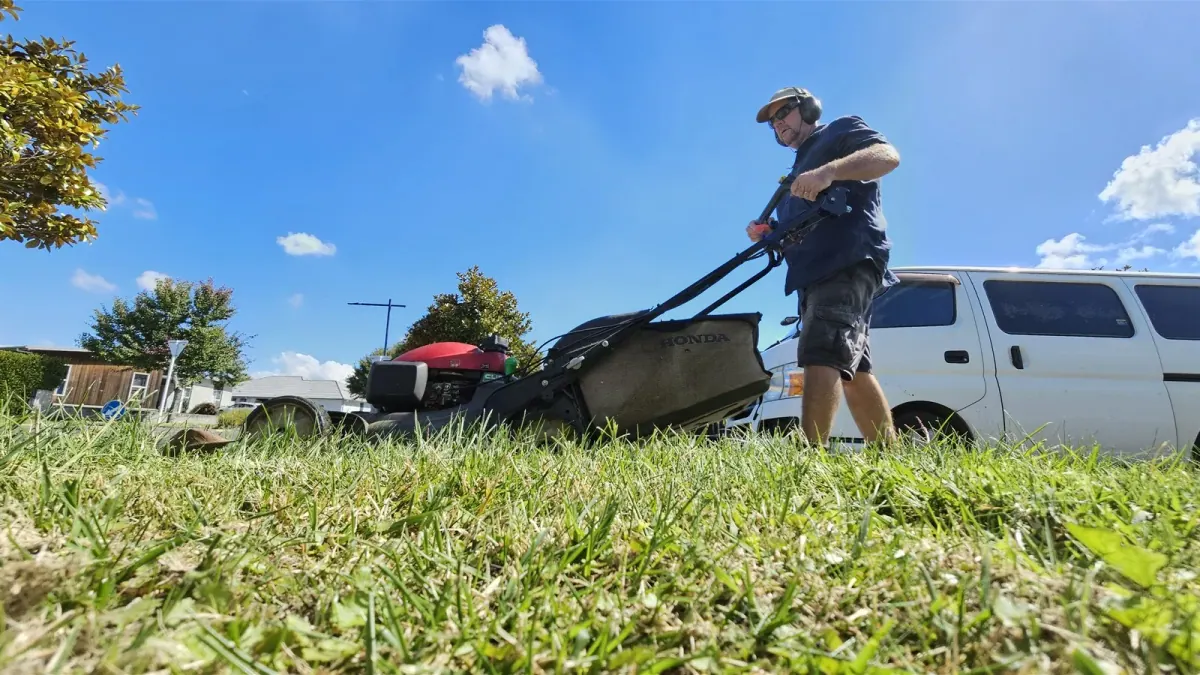
I have been in lawn care since 1992 and I have built three lawn businesses from scratch. I will be straight with you: I went full time from day one on all three, because I had no job to fall back on. But since 2017 I have worked with hundreds of lawn care businesses around the world, and a big share of them started exactly the way you are thinking about, mowing around a day job. I have watched what works and what does not, over and over. I took my last business to 450 customers and scaled it back to 200 in 2017. Today I still mow my own round in Hamilton, New Zealand, and it turns over about $2,000 a week on roughly 20 hours.
Twenty hours a week is a side hustle. That is the whole point of this post.
One thing to sort out first. If you have no job and no money, do not start part time. Treat it as a full time job from the first day, because that is the fastest way out of the hole. That is what I did, and I wrote about it separately. This post is for the person who has a job, wants to keep it, and wants the lawns to pay properly on the side.
Here are the nine things, in the order they matter.
1. Keep the job until the lawns outgrow it
This is the playbook I give everyone who asks me about starting on the side, and it has not changed in years.
Keep the job. Mow lawns in the evenings and on Saturday. Keep adding customers until the lawn money passes the job money, and only then hand in your notice. The job pays the bills while you learn to price, learn to quote, and find out whether you even like it. Most people find out they like it. Some find out they do not, and they walk away having lost nothing.
The trap is the other way around. Someone quits on a Friday with four lawns and a new mower on finance, and by winter they are ringing around for a job again. Nobody quits a lawn mowing side hustle because the work is bad. They quit because the money got tight before the round got big.
More: How to Start a Lawn Care Business, A Complete Guide and Starting a Lawn Mowing Business with Nothing
Do today: write down what your job pays you in a week after tax. That is the number the lawns have to beat before you quit. Not before you start.
2. Do the maths before you buy anything
One reply on that forum thread got it right in a sentence: think in terms of $50 an hour to really clear $30.
That matches my numbers. I aim for a $60 an hour charge-out rate, and about half of everything that comes in goes back out on fuel, blades, repairs, insurance and tax. Half is what you keep. So a $30 lawn that takes you 45 minutes with the drive is not a $30 job. It is a $20 an hour job, and after running costs it is a $10 an hour job. You would be better off doing overtime.
My minimums: $30 for a regular mow, $60 for a one-off. On a small lawn I quote about a dollar a minute of estimated job time, drive included.
Here is what a side hustle actually pays when the pricing is right. Where the grass grows all year, like here in New Zealand, a regular customer is on a fortnightly cycle that stretches to three or four weeks over winter, and that works out at about 21 cuts a year. At $45 a cut that is $945 a year per customer. In the US you sell weekly for the mowing season instead, so count the weeks your grass grows and multiply by your price per cut. Either way the numbers below are the shape of it.
- 10 customers: about $9,450 a year
- 20 customers: about $18,900 a year
- 40 customers: about $37,800 a year, and you are at 20 hours a week
Ten regular customers is a Saturday morning. Twenty is a Saturday and two evenings. Nobody on that forum thread was talking about numbers like these because they were all pricing at $10 a lawn from when they were kids.
More: How to Quote on Lawns, The Complete Guide and Are You Charging Enough for Your Lawns?
Do today: time your own lawn from getting the mower out to putting it away. Multiply the minutes by a dollar. That is roughly what you should be charging for a lawn that size.
3. Use the gear you already own
The fastest way to kill a lawn mowing side hustle is to spend the first year’s profit before you have mowed a lawn.
I once had a new operator with two customers tell me a dealer had tried to sell him a $2,000 commercial self propelled mower. It would not even fit in his van. I told him to buy under $1,000 and upgrade when he hit 80 to 100 customers. That is still my advice.
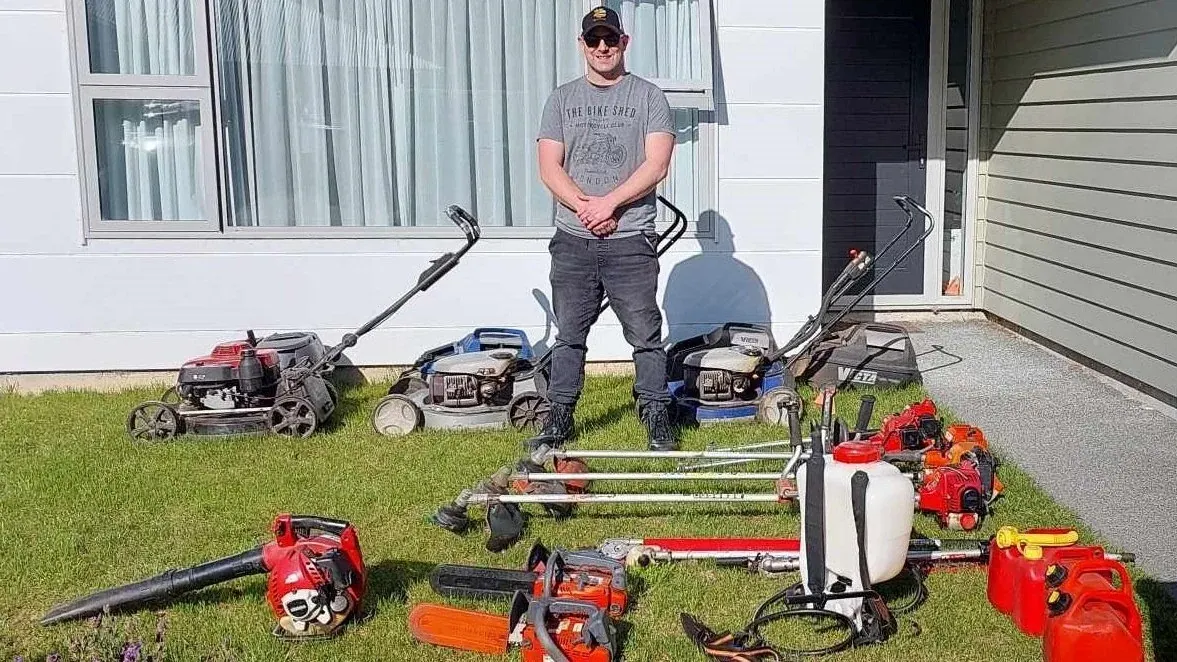
A high end domestic mower is plenty for the first twelve months and it costs a third of the commercial one. Get a push mower rather than self propelled, because there is no gearbox to break on the only mower you own. Straight shaft trimmer, not bent shaft. Any blower you already have is fine. I have one from 2010 that still runs.
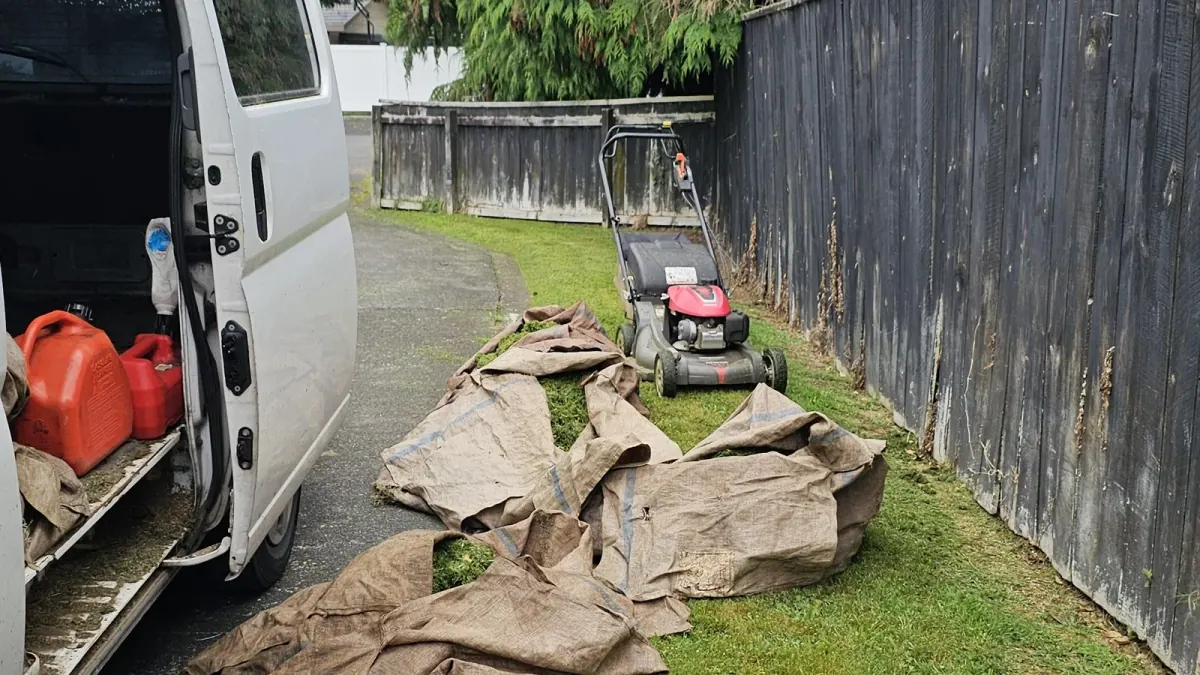
You do not need a trailer either. I ran a whole fleet of vans without trailers at one stage. Mower, trimmer and blower go in the back of the car, and the clippings go in bags behind the seat and get dumped at the end of the day. Use the car you already own with a tow bar if you must. Do not buy a “new” vehicle. I did that once and the engine blew up within a month. A known car beats an unknown one every time.
Buy the must-haves. Put whatever is left into getting customers, not nice to haves.
More: What Equipment Do You Need to Start a Lawn Care Business? and Can You Run a Lawn Care Business Without a Trailer?
Do today: list what you already own. Mower, trimmer, blower, car. If all four are on the list, you can start this weekend for the cost of a can of fuel.
4. Take small lawns only
This is the one that lets a part timer earn full time money per hour.
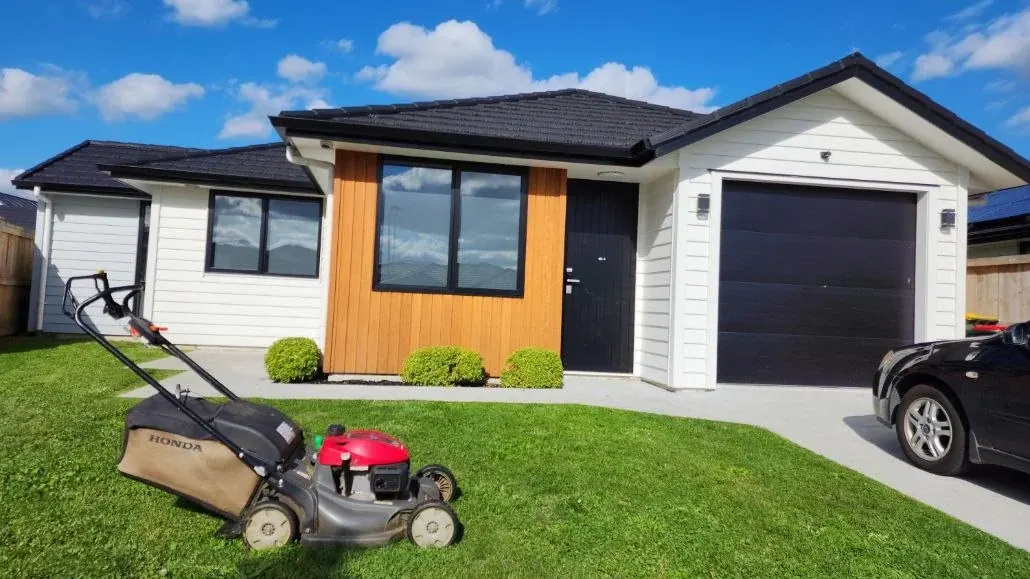
I chased big lawns for years. Ride-ons, self propelled mowers, more vehicles, workers. Then I worked out I would need over a thousand lawns to step away and match my income, and the ride-ons broke down constantly, killing jobs mid mow. So I downsized to my best 100 small lawns. Turnover dropped by half, my week fell to under 20 hours, and my take-home stayed about the same.
Small lawns mow fast, so the hourly rate is higher. They fit a push mower, which breaks down less and burns less fuel. They fit in an evening. And I would rather do three small lawns than one 90 minute lawn, because I usually earn more that way.
For a side hustle this matters twice as much. You have a two hour window after work. A big lawn eats the whole window and pays for one. Three small lawns in the same window pay three times, and if it rains tomorrow you have only pushed back three small jobs rather than one big one that now needs a whole Saturday.
Solo, I arrive at a new lawn about every 40 minutes on average with the drive included. At 60 years old I now do about eight lawns in a four hour day. That is a side hustle day, and it is a decent day’s pay.
More: Make Big Money Mowing Small Lawns and How Many Lawns Can You Mow in a Day?
Do today: decide your maximum lawn size now, before the first big one tempts you with a big price. Then say no to everything over it.
5. Build the round in one area
Your biggest cost as a part timer is not fuel. It is daylight.
You have maybe two hours after work. If those two hours hold twenty minutes of driving, you have lost a lawn. Compact routes earn more than spread out ones, and that is true for a full timer with a 40 hour week. For someone with ten hours it is everything.
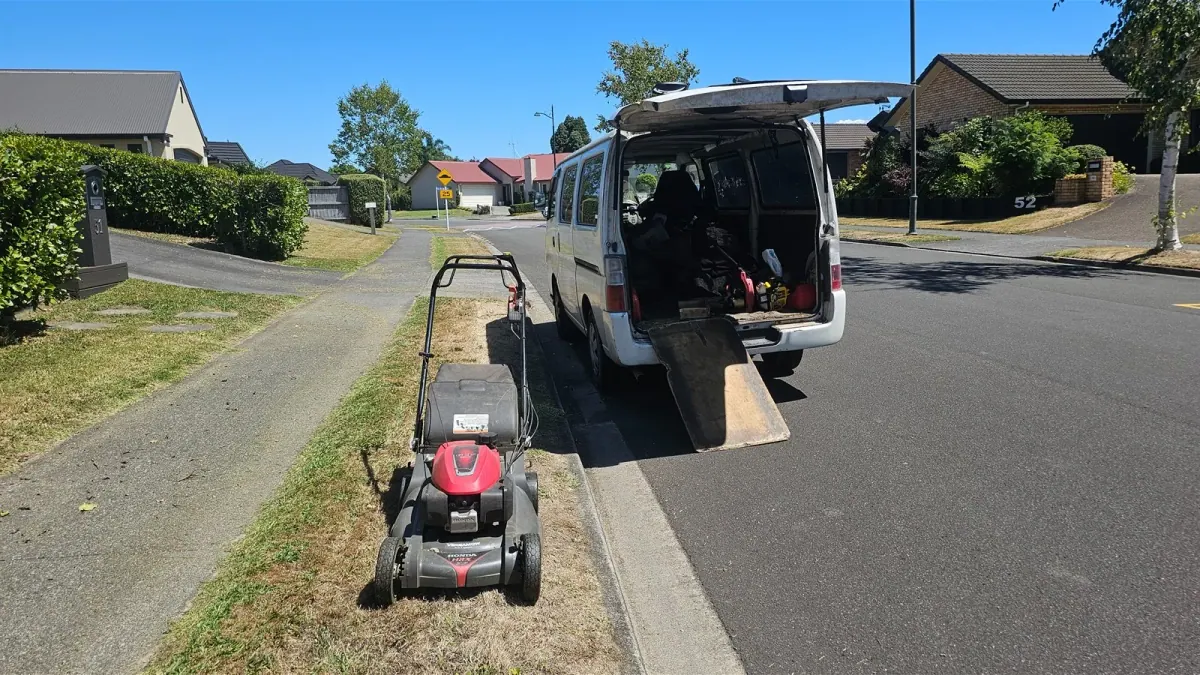
So pick one area and stay in it. Your own street, your suburb, the streets between home and work. When a lead comes in from the other side of town, say no or quote high enough that it is worth the drive. Swapping one distant lawn for a closer one each month can add about $120 a week without doing any extra work, just from the drive time you get back.
Run your side hustle in blocks. Tuesday evening is these four lawns. Saturday morning is these ten. Give customers a morning or afternoon window, never a fixed time, so a rained-out Tuesday slides to Wednesday without ten phone calls.
More: What Is the Best Way to Plan My Daily Lawn Care Route? and Easy Ways to Make More Money by Mowing Lawns Faster
Do today: draw a circle on a map around your house that you can drive across in ten minutes. That is your patch. Everything in this post happens inside it.
6. Get your first ten customers the cheap way
Back to the bloke in the group who did not have a clue how to get clients. Here is what I would do, in order, with almost no money.
First, set up a free Google Business Profile. It takes an hour. It is the best lead source in lawn care and it costs nothing. My own profile brings in 2 to 3 leads a week all year round, and I have not paid Google a cent for that listing. The category is Lawn care service. There is no lawn mowing category, because Google is an American company and in the US the whole trade is called lawn care. So put the words customers actually type in your services list and description. Here in New Zealand they search “lawn mowing”. In the US they search “lawn care”. I have the search data from my own profile to prove the words matter.
Second, mow a few lawns for family and friends, then ask each of them for a Google review. New profiles with five real reviews win jobs off old ones with none. When you have a list of regulars, Review Robot keeps the reviews coming without you having to remember.
Third, get fridge magnet business cards, not paper ones. I use Vistaprint, about $10 for 50. Paper cards are in the bin in a week. Magnets stay on the fridge for years and I have had people ring years later because of one.
Fourth, walk your patch. Knock on doors near lawns you already do. Put cards on the free noticeboards at the supermarket, the church and the laundromat.
The benchmark in my community is about one new customer a week once you are active, and that is my own experience too. One a week is 50 in a year. A side hustle cannot hold 50, which means the problem you are worried about, finding customers, is not the problem. Choosing which ones to keep will be.
More: 9 Ways to Get New Lawn Care Customers Fast and Google Business Profile Guide for Lawn Care
Do today: set up the Google Business Profile. Not tomorrow. It is free and it is the one thing on this list that keeps working while you are at your day job.
7. Set the price and the cycle at signup
Two questions come up on every one of those forum threads. Do I need a contract, and do I charge per cut or per week.
Per cut. And in my case, no written contract. I have sold hundreds of accounts over the years on verbal agreements and it has been fine. But verbal only works if you actually said it. So when a new customer says yes, you tell them the deal then, in one sentence. Here it is $45 a cut, every two weeks, all year round, stretching to every three or four weeks over winter when the grass slows. In the US it is $45 a cut, every week, for the season. That sentence at the moment they are keenest saves you the argument when the grass slows down.
Where the grass grows all year, fortnightly is the cycle to sell. About 70% of my customers are on a two-week cycle all year, and it stretches out in winter rather than stopping. In the US the normal sell is weekly for the mowing season, and a customer who wants every two weeks is bi-weekly, because nobody there says fortnightly. Either way, agree the cycle at signup. Letting each customer decide week by week is how you end up with a round that halves every autumn.
On pricing, use what I call the Goldilocks equation. If you win every quote, you are too cheap. If you lose four out of five, you are too dear. Winning about one in three is the sweet spot. When you are brand new, aim for one in two until you have work coming in, then price up to one in three. And if someone asks for a discount, remember that 10% off is forever. I would rather lose the quote than mow that lawn cheap for five years.
One-off jobs are paid upfront. Text them your account details before you turn up. Legitimate customers do not object, and the ones who do usually turn out to be the ones who were never going to pay.
More: Lawn Care Agreements with Customers: Do You Need One? and Dealing With Lawn Care Leads
Do today: write your one sentence. Price, cycle, and what happens when the grass slows. Say it out loud until it sounds normal.
8. Run it like a business from the first dollar
The difference between a side hustle that grows and one that fades is not the mowing. It is whether you can see the money.
Open a separate bank account for the lawns the week you start. Every customer pays into that account by bank transfer, not cash. Keep about half of what comes in there for tax and running costs. Pay yourself a fixed amount out of it every week, even if it is small. I have paid myself a fixed weekly draw for over a decade. It keeps the tax people happy and it means you know exactly what the lawns are worth to you.
Track every job. Customer, minutes taken including the drive, price, hourly rate. A simple spreadsheet is fine. Do this for a month and the pattern will surprise you. Smith takes 35 minutes at $40, which is $68 an hour. Brown takes 50 minutes at $30, which is $36 an hour. You cannot fix Brown until you have seen Brown in a column.
For software, you do not need any yet. Google Calendar for the schedule, colour coded, green for booked mows and yellow for quotes. Zoho Books is free until you turn over $50,000, which a side hustle will not.
Register the business properly once you have mowed a few lawns and know you are staying in it. Then sort liability insurance. Mowing throws stones and stones find windows. Do it before you are busy enough to forget.
More: Lawn Care Business Income: How Much Should You Pay Yourself? and How to Start a Lawn Care Business with No Money
Do today: open the second bank account. It takes ten minutes online and it is the day the hobby becomes a business.
9. Know the number that means quit
You will get asked, usually by the person you live with, when this stops being a side hustle.
Here is how I answer it. One person can handle about 100 regular fortnightly customers before the days get too long. On a weekly cycle it is about half that many, because each customer takes twice the visits. That is the solo ceiling. Full time, solo, I arrive at a lawn every 40 minutes and do about 12 lawns in an eight hour day. My own round now is about 40 lawns in a 20 hour week, by design, on smaller lawns.
So the path looks like this. Ten customers is a Saturday. Twenty is a Saturday and two evenings. Forty is 20 hours a week and about $2,000 a week at my prices, which is where I sit today. Somewhere between 20 and 40 the lawns start paying more than the job, and that is the number.
When you get there, do two things before you quit. Save a buffer of at least 25% on top of what you think you need, and save for winter, because a round that runs all year still slows down in the cold months, and a seasonal round stops. Then hand in your notice with a full Saturday and two full evenings already booked.
And do not hire anyone. Not until you are past 40 hours a week on your own. Two people mow about a third faster than one, not twice as fast, and the helper’s pay eats about the same third. A lawn mowing side hustle is a one person job right up until it is not a side hustle any more.
More: Should You Hire Someone to Help You in Your Lawn Mowing Business? and One Man Lawn Care Business
Do today: put the number from step one on the fridge next to your customer count. When the lawns beat it, you will know.
The pattern behind all nine
Every one of these comes back to the same thing. Price it like a business from the first lawn, and keep the job until the business is real.
The people on those forum threads who say it does not work are all describing the same setup. Cheap lawns, big lawns, spread across town, on a mower that cost more than the first year’s income, with no idea of the hourly rate because nobody ever timed a job. Of course that does not work. It would not work full time either.
The people quietly doing it well are running ten to forty small lawns inside one suburb, at a proper price, on a cycle agreed at signup, on gear they already owned. They do not talk about it much because it is boring. Boring is what a good lawn mowing side hustle looks like.
I have helped a lot of people start this way. For the ones who made it, the side hustle was never the small version of the business. It was the first year of it.
Frequently asked questions
How much can you make with a lawn mowing side hustle? In a climate where the grass grows all year, a regular fortnightly customer is worth about 21 cuts a year. At $45 a cut that is $945 a year each. On a US season, count your mowing weeks and multiply by your price per cut. Ten customers is about $9,450 a year for a Saturday morning. Forty is about $37,800 on 20 hours a week. Expect to keep roughly half after fuel, repairs, insurance and tax.
Is mowing lawns on the side worth it? Yes, if you price it properly. At a $60 an hour charge-out rate, clearing about $30, it beats most second jobs and you set the hours. At $20 a lawn on big lawns across town it is not worth it, and that is where most of the “it does not work” stories come from.
What equipment do I need to start a lawn mowing side hustle? A push mower, a straight shaft line trimmer, a blower and a car. If you already own them, start with them. Buy a high end domestic mower under $1,000 rather than a commercial one until you have 80 to 100 customers. You do not need a trailer.
How many lawns can I mow after work? Two to four small lawns in a two hour evening window, depending on the drive between them. Keep them inside one small area and take small lawns only. Solo, I arrive at a new lawn about every 40 minutes on average.
Should I charge per cut or per month? Per cut. Where the grass grows all year, sell fortnightly, stretching to three or four weeks in winter. In the US, sell weekly for the season, or bi-weekly if they ask. Tell them the price and the cycle in one sentence when they say yes. About 70% of my customers stay on a two-week cycle right through winter because that is what they agreed to at the start.
Do I need to register a business or get insurance to mow lawns on the side? Mow a few lawns first and make sure you are staying in it. Then register properly, open a separate bank account and get liability insurance. Rules on licences and registration vary by where you live, so check locally.
How do I get my first customers? Set up a free Google Business Profile under the Lawn care service category, and list your services in the words people type. In New Zealand and Australia that is “lawn mowing”. In the US it is “lawn care”. Mow for friends and family and ask for reviews. Hand out fridge magnet cards in your own streets. Once you are active, about one new customer a week is normal.
When should I quit my job and go full time? When the lawns pay more than the job, not before. For most people that lands somewhere between 20 and 40 regular customers. Save a 25% buffer and a winter float first, and do not hire anyone until you are past 40 hours a week on your own.
Next step
Do one thing this weekend. Time your own lawn, work out what it should cost at a dollar a minute, and set up a Google Business Profile. That is your side hustle started, for the price of a can of fuel.
Then come and tell us how the first quote went. I run a free community of lawn care business owners, plenty of them mowing around a day job, and I am in there daily. I also run a Facebook group of more than 180,000 lawn care businesses worldwide, so whatever you get stuck on, someone has already been stuck on it.

34 years mowing lawns. Built it up to five vans and 450 contracts, then cut back to a 20-hour week on the best lawns. My story.
Want more lawns?
I build lawn care websites first, free. You see it live before you pay a cent.