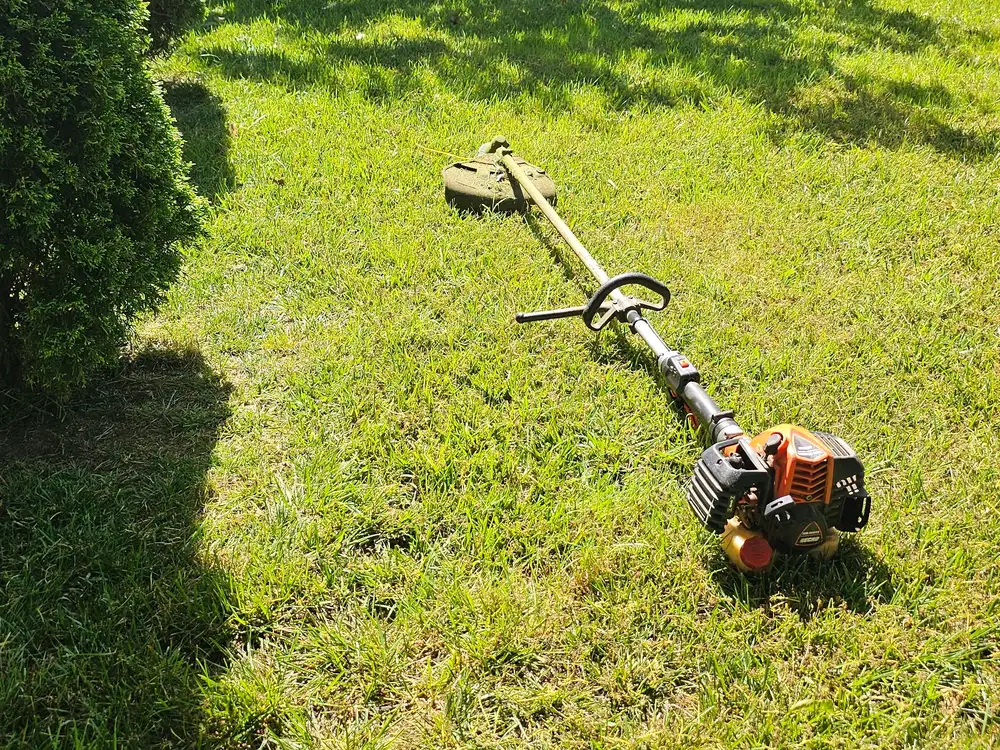
After 34 years the machine feels like an extension of my arm, and I'm still amazed how many contractors use it wrong. Before we get to the most efficient way to trim a lawn, a bit about the machines. For 2026 I went through the big review sites (Consumer Reports, Bob Vila, Popular Mechanics, Pro Tool Reviews, TechGearLab) and picked the machine that came out on top for each job. Prices are US dollars as at September 2026. The rest of my gear is on the recommended gear page.
Bent shaft vs straight shaft
The big difference between a domestic and a commercial trimmer is the shaft. A bent shaft is cheaper and lighter, and you might be tempted when you're starting out. I owned a few. The drawback is they're hard to get under shrubs, trampolines and garden furniture, and I was never fully happy with the finish. If you use one daily you'll likely replace it every year. A good straight shaft lasts up to five, so it wins over the long run.
If your heart is set on a bent shaft, or you're buying for home, this ECHO is the top-rated gas curved shaft in Consumer Reports' testing. The Husqvarna 130C scored about the same, but it has an open recall for an ignition wiring fire risk, so I'd go ECHO.
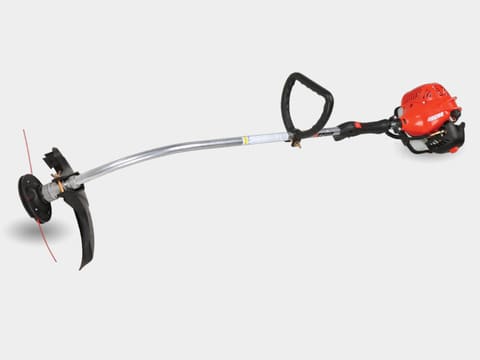
21.2cc, 10.1 lb, curved shaft. Consumer Reports' top gas curved shaft trimmer. About $200.
See it at ECHOThese days I use nothing but straight shaft. My backup is a straight shaft I bought in 2011.
Two-stroke vs four-stroke
I won't say much about battery trimmers as I haven't used them on the job. The batteries keep getting better and more contractors are using them. I've handled them and find them top heavy, with the drive in the head and the battery on the back as a counterweight. Takes getting used to. For a home lawn, this EGO wins more review awards than any other battery trimmer: TechGearLab's best overall, Pro Tool Reviews' best for homeowners, and Popular Mechanics' most user friendly. Up to an hour a charge and the line feeds itself.
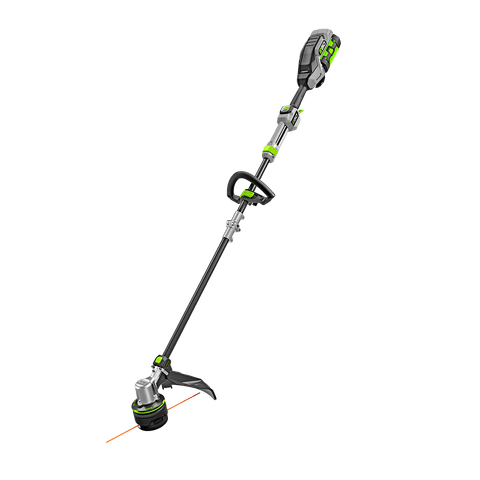
56V, 16-inch cut, carbon fibre shaft, 4.4 stars from over 2,000 Amazon reviews. About $260 to $300 with battery and charger.
See it on AmazonTwo-stroke
- Needs a premix of oil and petrol
- Louder
- More power for the size
- Cuts thick grass with less strain
- Lighter
- Cheaper
Four-stroke
- Runs on straight petrol, no premix
- Quieter
- Runs more efficiently
- Heavier
- Usually more expensive
I have half a dozen trimmers and they're all two-stroke. I've used most brands in my market and now mostly run Shindaiwa. Few problems, and my oldest is seven years old and still going. Shindaiwa is made by ECHO these days, and ECHO is what most US contractors run. It's much easier to find, with more dealers and stock at Home Depot. For day-to-day work, this is the one. It's close to the same machine as my Shindaiwa T262. I run 095 cord in mine.
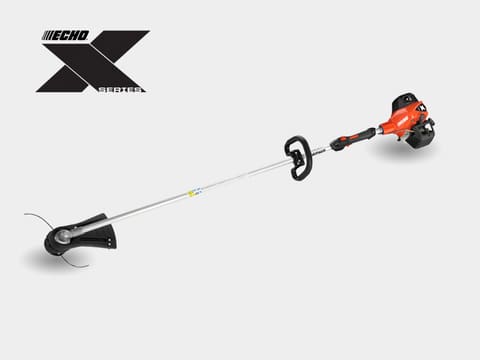
25.4cc, 12.6 lb, straight shaft. Consumer Reports' top-scoring gas straight shaft trimmer. About $400.
See it at ECHOIf you do a lot of overgrown lawns, get the T version. Same engine, but a high-torque gearbox that doesn't bog down in thick grass. Pro Tool Reviews and Lawn Love both name it the best for professionals.
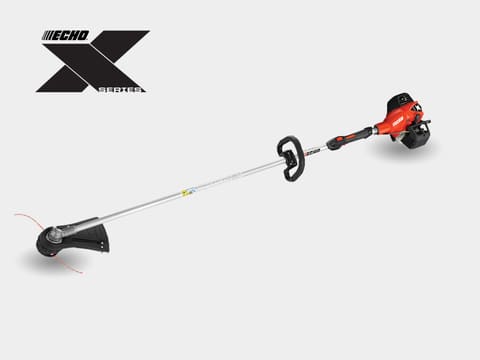
25.4cc, 12.8 lb, high-torque gearbox for thick and overgrown grass. About $450.
See it at ECHOHow to use a line trimmer
When I trained new guys I'd show them how to handle the machine and send them off. Then I noticed how they worked: what I call the hunt and peck method. Like a chicken pecking for food, running from one spot to the next with no plan. It takes longer and you miss bits. The quick way is mostly common sense:
Trim first
When you arrive at the lawn, trimming is the first job.
Go anticlockwise
All the grass and debris gets thrown onto the lawn. Less chance of breaking a window, less mess on the concrete to blow off at the end.
Hold it at 45 degrees
That tapers the cut. Hold the head flat and you get a flat line the width of the string along every edge, and it doesn't look good.
One path, all the way round
Follow an anticlockwise line right around the property. If there's a tree in the lawn, step off your line, trim around it, and step straight back. Picture one path and don't leave it. Done right, you finish where you started, never go over the same line twice, and nothing in the middle gets missed.
Safety
Always wear safety glasses and earmuffs. Never walk backwards or sideways with a trimmer; it's a bad habit to get into. Walk forward with your left shoulder to the grass and you'll have good control. On footpaths, stop and let people pass. Around stones or anything that can be thrown, drop the revs.
Accessories
If you want to do light scrub cutting now and then, you'll need to fit a blade, and your trimmer needs to be over 22cc. Even then it'll struggle. You really need a bigger machine for that work.
Some trimmers have a detachable shaft that takes other tools: a chainsaw, wheel edger or hedge cutter. That's a multi-tool, and it's a great way to add income without buying a new engine for every job. I use a Shindaiwa M235. The best-reviewed multi-tool right now is this Ryobi battery one: Bob Vila's best expandable trimmer, with over 4,000 ratings at Home Depot. It takes Ryobi's Expand-It attachments (edger, hedge cutter, pole saw and more), sold separately. It's a homeowner machine, so for daily business work I'd still go gas.
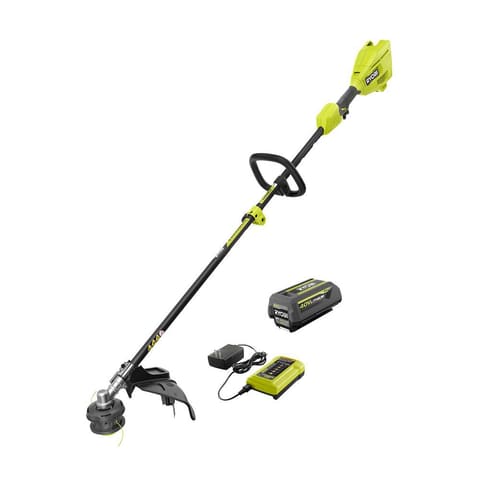
40V battery, 11.8 lb, attachment-capable. Kit includes battery and charger. About $160.
See it at RyobiMore gear
Mowers, blowers and the small stuff.