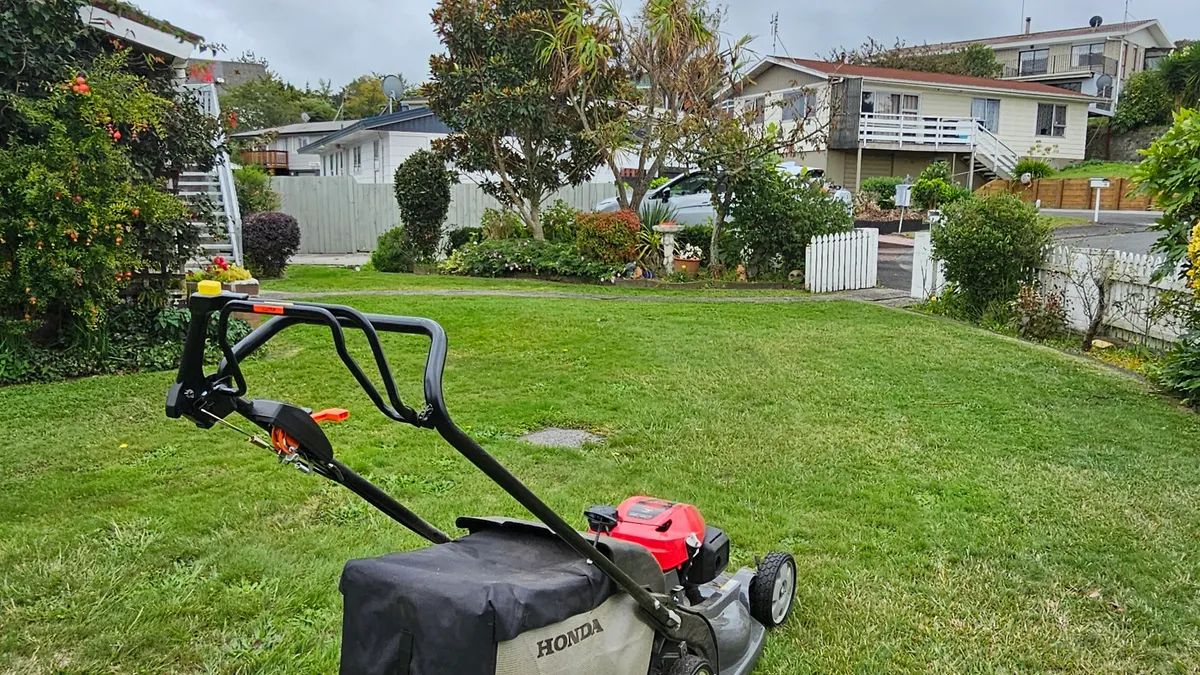
Finding out how much a lawn mowing customer is really worth?
Sometimes lawn mowing contractors will tell me that if it’s a low-value lawn, it is hardly worth the advertising it took to bring in the customer. Why spend $25 to bring in a $25 customer?
Your average lawn mowing customer is worth a lot more than that.
There is a simple way to determine how much a lawn mowing customer is really worth.
As a lawn mowing business owner, each customer is valuable to you.
Each customer that you acquire is worth a certain amount of money to your business. The value of a customer is determined by how much revenue they generate for your business minus the costs associated with acquiring and servicing them.
The revenue a customer brings in is determined by the frequency with which they use your services, the price they pay for those services, and their willingness to refer other customers to you. The costs of acquiring and servicing a customer include advertising, fuel, equipment, and labour costs.
A loyal customer who uses your services regularly and refers others to you is worth a great deal to your business. They help to offset the costs of acquiring new customers and keep your business running smoothly.
Customer lifetime value
A new customer who is looking for a lawn mowing service is not only looking for someone to cut their grass once. They are looking for a long-term solution to their lawn care needs. A lawn mowing service that can provide them with consistent, quality service at a fair price will quickly become their go-to choice for all of their lawn care needs
As a result, the true value of a lawn mowing customer is not measured in one mow. It is measured by the formula known as customer lifetime value. This formula takes into account the number of years that a customer is likely to use your services, as well as the average amount they will spend each year.
By providing consistent, quality service, you can ensure that your customers will continue to use your services for years to come, resulting in a high customer lifetime value.
Replacement value
When thinking about how much a customer is worth, it’s important to consider the replacement cost. This is the cost of acquiring a new customer to take the place of an existing one.
For example, if a customer has been with a company for 10 years and spends an average of $100 per month, their lifetime value would be $12,000. However, if it costs $500 to acquire a new customer, then losing that one customer costs you the $500 to find a new one, plus the income you miss while you do.
As a result, the replacement cost is an important factor to consider when determining customer value.
Your current customers are a great place to find more work
For any business, customer acquisition can be a costly and time-consuming process. However, once a customer has been acquired, it is important to nurture that relationship and keep them coming back.
This is especially true for businesses like lawn care that rely on repeat business. Not only is it more cost-effective to retain existing customers than to acquire new ones, but loyal customers are also more likely to give referrals, providing an additional source of leads.
Therefore, it pays to focus on advertising and marketing efforts toward current lawn mowing customers. By cultivating a strong relationship with them, businesses can ensure a steady stream of revenue for years to come.
Now let’s do some sums
Considering the different seasons, you would expect to get around 21 mows in a year. If you were looking at a minimum charge of $35 and your average customer lifetime length of three years, your lowest customer value would be $2,205.
The goodwill value based on the standard 12 weeks turnover would be $210. Much more than you paid to get the customer.
Cost of purchase
If you were to buy a lawn mowing customer list, you would be paying somewhere north of $12K for a business of 50 clients turning over $1K a week.
If you built that yourself, spent $20 a lead, and only secured one in three quotes, then it will cost you $60 to bring on every new customer. So to build a business of 50 customers turning over 1K a week would cost you 3K instead of 12k.
That sounds like a bargain to me.
What is your time frame?
However, another thing to take into consideration is your time frame. If you want income tomorrow, buying a business is your only choice. It would take you six months to build a business this size.
Building is your best option if time is on your side.
Work out your own number in five minutes
Don't take my figures. Grab your own and do this on the back of a quote pad.
- Take your average price for a regular mow. Mine starts at $35. A one-off mow starts at $60.
- Multiply it by 21. That's how many cuts I get from a regular customer in a year. It already allows for the slow winter months, so don't knock anything off for that.
- Multiply that by how many years your customers usually stay. If you're new, use three.
- Take off roughly half for running costs and tax. What's left is what that customer puts in your pocket.
A $40 lawn works out to $840 a year, and $2,520 over three years. That's the lawn some guys say isn't worth the petrol.
Once you know that number, spending $20 or $60 to win the customer stops looking expensive.
The part most people forget: referrals
A good customer doesn't only pay you. They talk over the fence.
When the neighbour sees a tidy lawn every fortnight, they ask who does it. That lead cost you nothing. I sell pre-qualified leads to other operators for $20 each, so every free referral is at least $20 you didn't have to spend.
Add that to the lifetime sum and even a small lawn is worth a lot more than it looks on the invoice.
What it looks like when a round sells
I've sold at least one round of lawns every year for over two decades. My starting point for goodwill is 12 weeks' turnover. Then it goes up or down depending on pricing, how many customers are regulars, and how tight the run is.
That goodwill only holds if the customers stay. When I hand a round over, the new owner and I meet the customers in person, and I guarantee the accounts for 30 days. The drop-off is under 1%. No contracts. Just people who were looked after and are happy to carry on.
A buyer should still expect to lose about 10% after a handover. Every customer you keep happy now is money you get back when you sell.
Look after the customers you've already paid for
You've spent money getting them. Don't lose them over small stuff.
- Turn up when you said. Reliability is the whole job.
- Tell them about damage first. If you chip a pot or flick a stone, tell them before they find it.
- Keep payment simple. We text on the day the job's done and give 24 hours to pay. About 90% pay that way.
- Raise prices slowly. Time your jobs, then lift one customer a week based on the real numbers. Never a blanket increase that makes the whole round shop around.
Treat your customer list like the asset it is. Because when you sell, that's exactly what it is.
In Closing
A good lawn-mowing customer is pure gold.
They are the bread and butter of the business, and they keep you busy week in and week out. Most importantly, they are always happy with your work and they always pay on time.
You can’t go wrong if you aim to bring on one or two good customers a week. They will keep your business thriving and your bank balance healthy.
So go out there and find those lawn-mowing customers of your dreams!

34 years mowing lawns. Built it up to five vans and 450 contracts, then cut back to a 20-hour week on the best lawns. My story.
Want more lawns?
I build lawn care websites first, free. You see it live before you pay a cent.