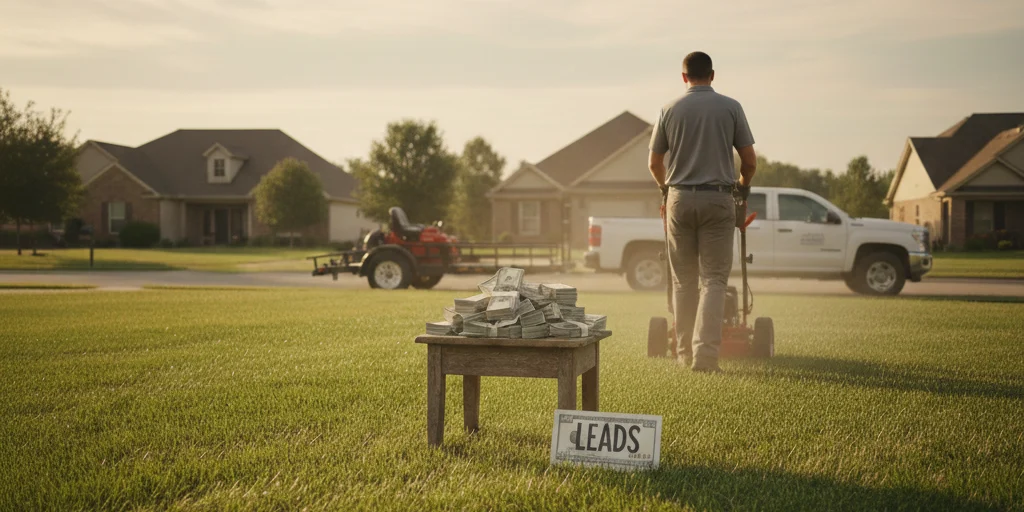

Commercial lawn care contracts are not bigger residential lawns. They are a different customer.
I have had both. At one point I ran 5 vehicles and over 450 lawns, and some of that was commercial. I carried $10 million of liability cover because one of the contracts was a hospital. I still run a furniture warehouse contract today, and I do not do the driveway or the gardens myself. I put another contractor on it and bill the markup.
Most guys chase commercial because the invoice looks good. Then they find out the money comes in 60 days late and the site has its own rules.
So here is how commercial lawn care contracts actually work. Nine things, in the order they matter.
1. Know what you are actually chasing
A residential customer picks you because you turned up fast and you were friendly. Commercial lawn care contracts go to whoever looks like the safest choice on the list.
That is the whole difference. Nobody at a property management company gets promoted for finding a cheap lawn guy. They get in trouble for hiring one who does not show up, is not insured, or turns their tenant into a complaint.
So stop selling price. Sell certainty. Same day every fortnight, same standard, one invoice, no drama.

Commercial lawn care contracts are recurring by design, and that is the real prize. A residential customer can cancel because their son bought a mower. A commercial site still needs mowing next year.
Do today: write down the three things a commercial client would fire you for. Fix the one you are worst at.
2. Chase small commercial, not the big tender
Everyone starts by looking at the council parks contract. Skip it. Those go to companies with a tender department and machines you do not own.
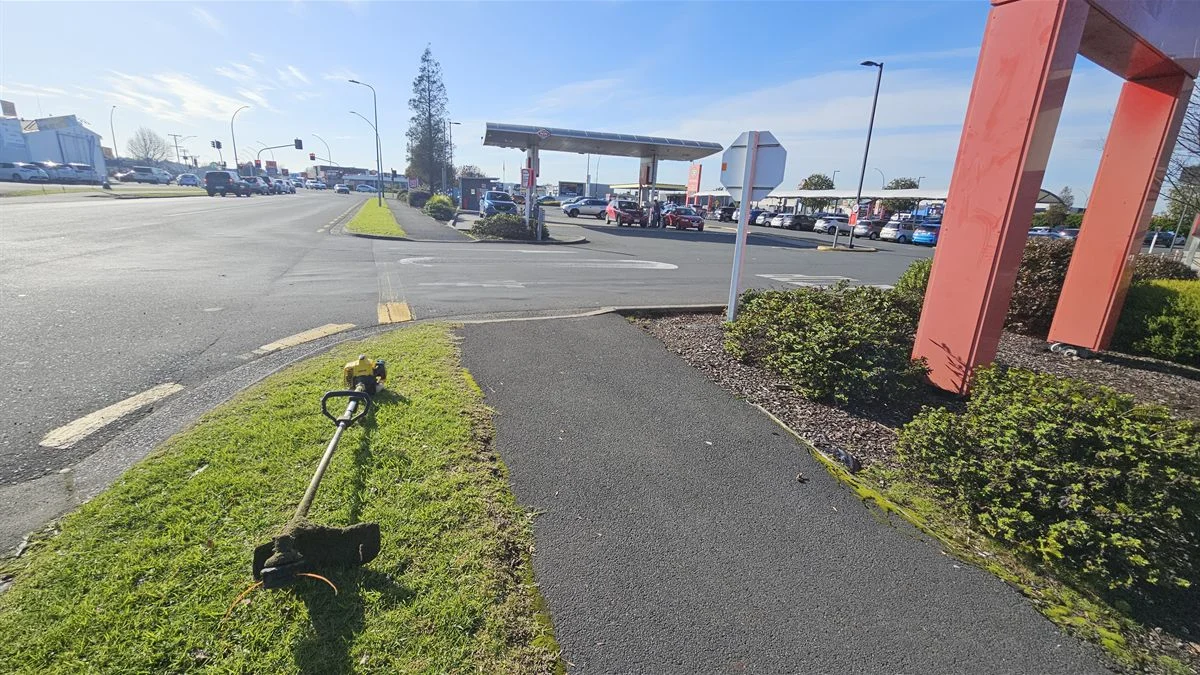
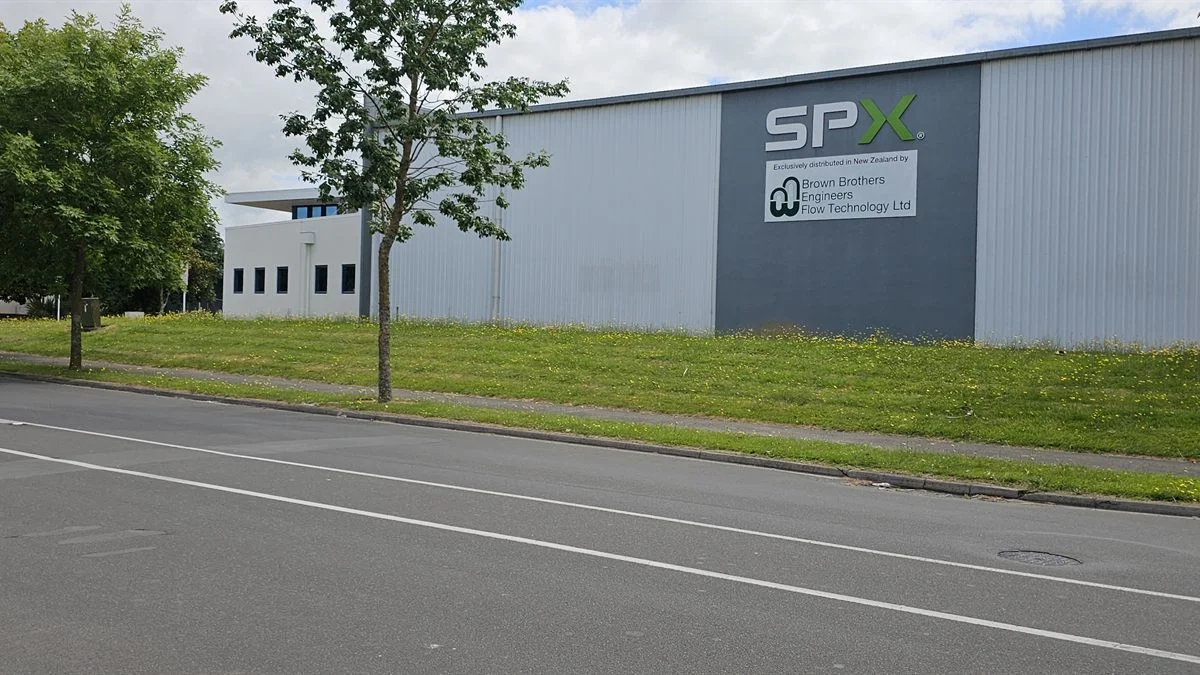
The commercial lawn care contracts a solo operator actually wins are the small ones. Rental properties through a property manager. Body corporates and small apartment blocks. A childcare centre. A church. The strip of grass out front of a panel beater, a warehouse, a car yard. Real estate agents with vacant listings.
These are the same size as a residential lawn. You already have the gear. The difference is who signs off and how you get paid.
My own round is deliberately small lawns close together. Commercial works the same way. A warehouse frontage you mow in 25 minutes on a route you already drive beats a sports field an hour away every time.
More: Make Big Money Mowing Small Lawns and What Is the Best Way to Plan My Daily Lawn Care Route?

Do today: drive your existing round and write down every commercial property you already pass.
3. Get the paperwork sorted before you ask
This is where most guys lose commercial lawn care contracts, and they never find out why.
A residential customer will never ask for your insurance certificate. A commercial one asks first. If you cannot email it back the same day, you are done.
Public liability cover is the big one. One to three million is typical. I carry a lot more than that, and the reason is the hospital contract. Ask what the site you are chasing expects, because a school or a healthcare site sets the bar, not you.
Know what your cover does not include. Mine will not cover chemical damage without the licence, and it will not cover tree work above 3 metres. I have seen a contractor kill a kindergarten lawn with the wrong spray and find out he had no cover because he had no certification. Do not quote work you are not covered for.
Be registered properly, with a business bank account and the tax side clean. A commercial client is putting you into their accounts system. Sole trader is fine to start.
More: How to Start a Lawn Care Business Legally and Offering weed spraying as a service

Do today: save a PDF of your insurance certificate to your phone so it is one forward away.
4. Find the person, not the building
You do not sell to a warehouse. Commercial lawn care contracts get signed by whoever is annoyed about the grass.
For rentals and apartment blocks it is the property manager. For a small business it is the owner or whoever opens up in the morning. For a body corporate it is the committee chair or the management company.
Property manager partnerships are one of the best marketing methods I have used, because one relationship gives you a stream of properties instead of one lawn. Get on the list once and they come to you.
Do not fill in a general enquiry form. Walk in, ask who looks after the grounds, get a name and a mobile number, and leave. That is the whole visit. You are not pitching yet.
More: 21 Great Ways to Market Your Lawn Care Business and Dealing With Lawn Care Leads
Do today: get the name and number of the person who handles grounds at one property you drive past.
5. Price it on time, then add for the hassle
My quoting rule does not change for commercial lawn care contracts. I quote $1 per minute of estimated job time. My minimums are $30 for a regular mow and $60 for a one off.
What changes is what goes into the estimate. Commercial lawn care contracts carry costs a residential lawn does not.
Locked gates and a key you have to collect. A site induction. Signing in at reception. Working before the place opens or after it closes. Cones if the public walks past. Rubbish, butts and bottles you pick up before you can even start. And waiting 30 days or more to get paid.
Price the site as you find it, not as you hope it will be. Then check yourself with the Goldilocks test. Win every quote and you are too cheap. Lose four out of five and you are too dear. About one in three is right.
Remember the maths behind your day. You only get about 6.5 productive hours out of 8 once you count travel, fuel and the dump run. You need roughly $60 an hour charged out just to stand still. A commercial job that pays well but eats your morning in admin is not a good job.
Full method: How to Quote on Lawns, The Complete Guide and Are You Charging Enough for Your Lawns?
Do today: time yourself on one lawn, gate to gate, including the drive. That is your real number.
6. Quote so they can say yes without thinking
A quote for commercial lawn care contracts is a document that has to survive being forwarded to someone who has never met you.
Put the property address on it. List exactly what is included. Mow, edges, blow down, clippings taken or mulched. List what is not included. Gardens, hedges, spraying, rubbish removal. Give the frequency and the price per visit, and the winter cycle if it differs from summer.
Then add the three lines that actually win it. Your insurance cover and the amount. Your start date. Your mobile number.
Say what happens when it rains. Say what happens if you cannot get in. Uncertainty is the thing they are scared of, so take it off the table in writing.
And quote fast. Same day if you can. This is the one thing a big company cannot beat you at. They cannot turn a quote around in an hour. You can.
More: Incoming Lawn Mowing Quotes: 7 Red Flags
Do today: build one quote template you can fill in on your phone in five minutes.
7. Decide whether you actually need a contract
Here is where I go against the grain on commercial lawn care contracts. My own business does not use written agreements. Verbal only, on hundreds of accounts, for over 30 years. If a customer ended it early it would not be worth my time chasing it up.
But commercial is one of the places a written agreement earns its keep, for two reasons.
Their own systems often require one before they can raise a purchase order. That is not about trust, it is about their accounts department.
And where the work is front loaded or seasonal, a termination clause protects you. If you take on a fixed season and they walk halfway through, you cannot replace that slot.
If you write one, five things go in it. The services provided. The payment schedule. The duration. Who is responsible for what. And how either side ends it.
Keep it to one page. A one page agreement that gets signed beats a ten page one sitting in someone’s inbox.
More: Lawn Care Agreements with Customers: Do You Need One?
Do today: write your one page agreement, or decide out loud that you are running verbal and why.
8. Set the money terms before the first cut
Residential is easy. I text on the day and about 90% pay inside 24 hours. Commercial lawn care contracts do not work like that, and if you do not set the terms up front you will be funding their business with yours.
Agree the terms before you mow. Invoice monthly, terms in writing, and find out their actual pay run date, because plenty pay on the 20th of the following month no matter what your invoice says. That can be six weeks from your first cut. Budget for it.
Get a purchase order number if they use them. Without it your invoice sits in a queue forever. Put it on every invoice after that.
Invoice on time, every time, the same day each month. Late invoices train them to pay late.
And keep my hard rule. Never let your total outstanding debt exceed one week’s income. If a commercial client is drifting past that, stop and sort it before you mow again.
More: Are your customers paying on time?
Do today: ask your one commercial prospect what day of the month their pay run goes out.
9. Never let one client own you
This is the rule that stops commercial lawn care contracts from wrecking you.
Never take more than 25% of your revenue from one client.
It feels great when you land a big one. Then they restructure, or the property manager leaves, or the site sells, and a quarter of your income goes in one phone call. You do not get 30 days to find another one that size.
Same with your week. If a single site needs two people, or has to happen on a fixed morning, it now controls your route. Two people in one vehicle only work about 1.5 times as fast as one, and the pay eats that gain. I found one person crews about 30% more profitable than two person crews.
If a job is too big for you, do not turn it away. Do what I do with the warehouse. Put another contractor on the part you do not want and bill the markup. You keep the client, they do the work, and you stay solo.
More: Should You Hire Someone to Help You in Your Lawn Mowing Business? and Should I offer other services in my lawn care business?
Do today: work out what percentage of your income comes from your biggest single client.
The pattern behind all nine
Commercial lawn care contracts are not won on mowing. They are won on being the safe option.
The insurance certificate that came back in ten minutes. The quote that answered the rain question before they asked it. The invoice with their purchase order number on it. The same day, every fortnight, for three years.
None of that is hard. Most of your competition just cannot be bothered doing it.
The mowing is the easy part. It always was. Get the boring half right and commercial lawn care contracts will hold your round together through every winter you have left.
Frequently asked questions
How do I get my first commercial lawn care contract?
Start with the commercial properties already on your round. Most commercial lawn care contracts begin with a walk in, not a tender. Walk in, get the name of the person who handles grounds, and quote the same day with your insurance details on the quote.
Do I need a written contract for commercial lawn care?
Often yes, because their accounts system needs one before they can raise a purchase order. Keep it to one page covering services, payment, duration, responsibilities and how either side ends it.
How much insurance do I need for commercial lawn care contracts?
One to three million public liability is typical. Bigger sites set their own bar. I carried far more than that because one of my contracts was a hospital. Ask the client what they require before you quote.
How should I price a commercial lawn?
The same way as any lawn, on estimated job time, at $1 a minute with a minimum. Then add for the site rules, the sign in, the rubbish pickup and the wait for payment.
How long do commercial clients take to pay?
Longer than residential. Many pay on a fixed monthly run, often the 20th of the following month. Ask for their pay run date up front, and never let your total outstanding debt exceed one week’s income.
Can a one man lawn care business handle commercial work?
Yes, if you pick small commercial. Frontages, rentals and small blocks are the same size as a residential lawn. Subcontract the parts you do not want and bill the markup.
What is the biggest mistake with commercial lawn care contracts?
Letting one client become too much of your income. Keep any single client under 25% of your revenue.
Next step
If you want the whole thing laid out, my free group has the Google Business Profile walkthrough, a business plan template, and a free website giveaway every month.