
Every lawn care referral program I can find online has a dollar figure in it. Twenty-five dollars a friend. Fifty off your next treatment. Refer enough people and your lawn is free. I have never paid a customer for a referral, and I still get one or two a month without asking.
I have been in lawn care since 1992 and built three lawn businesses from scratch. I still mow my own round in Hamilton, New Zealand, under the Gecko Lawns name. I also run a Facebook group of more than 180,000 lawn care businesses, and “how do I get more referrals” comes up in there every week. The people asking usually want to know how much to pay. The answer is nothing. The referral is earned on the lawn, not bought afterwards.
This post is the nine things that actually bring them in. None of them cost money. Most of them take under a minute.
What a lawn care referral program looks like when nobody gets paid.
I am not a fan of discounts. I have said so on this site for years. A new-customer discount attracts the wrong type of customer, the one who is with you for the price and gone the moment someone is cheaper. A referral reward does the same thing one step removed. The friend who came for the $20 is the friend who leaves for $20.
What I do instead is simpler. I do the job properly, I turn up when I said I would, and I make it easy for a happy customer to hand my number over. That gets me one or two referred customers a month. It has been done for years.
Here is what one of those is worth. On my round a regular customer is 21 cuts a year. At $45, a cut that is $945 a year, from one conversation over a fence that I was not part of. Multiply that by one or two a month and you can see why I do not need to add a gift card to it.
To be clear, paying for referrals is allowed. Google bans paying for reviews, and it will strip a listing for it, but a referral thank-you is your business. I just do not do it, and after 30 years I have not found a reason to start.

More: How A Successful Lawn Mowing Marketing Plan Can Quadruple Your Customer Growth and How to Get Google Reviews for Lawn Care: How I Got to 87
Here are the nine, in the order they matter.
1. Turn up when you said you would.
The reason I hear most often from a new caller is that their last lawn guy stopped turning up. Not that he was expensive. Not that he did a bad job. He just stopped coming.
Callers ring three or four businesses. One of them shows up to quote. That one gets the job, and if he keeps showing up, he gets the neighbor’s job too. Reliability is the whole referral program for most customers, because it is the thing their friends complain about not having.
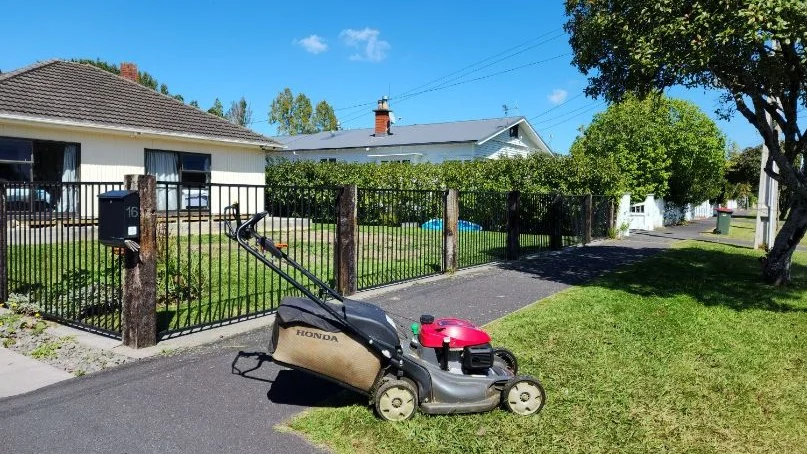
If I am going to be late, I text before they notice. Ten minutes out if it is ten minutes. First thing in the morning on the whole day’s list if it is rain, there is a breakdown, or I am sick. A customer who was warned does not feel let down. A customer who is standing at the window does.
More: How to Effectively Communicate With Your Lawn Care Customers
Do today: if you are behind on anyone this week, text them now with the new day. Do not wait for them to ask.

2. Do the small thing that is not your job.
I won a customer years ago because her previous lawn guy refused to trim a narrow garden strip beside the path. He told her it was not his job. He was right. It is definitely not his job now.
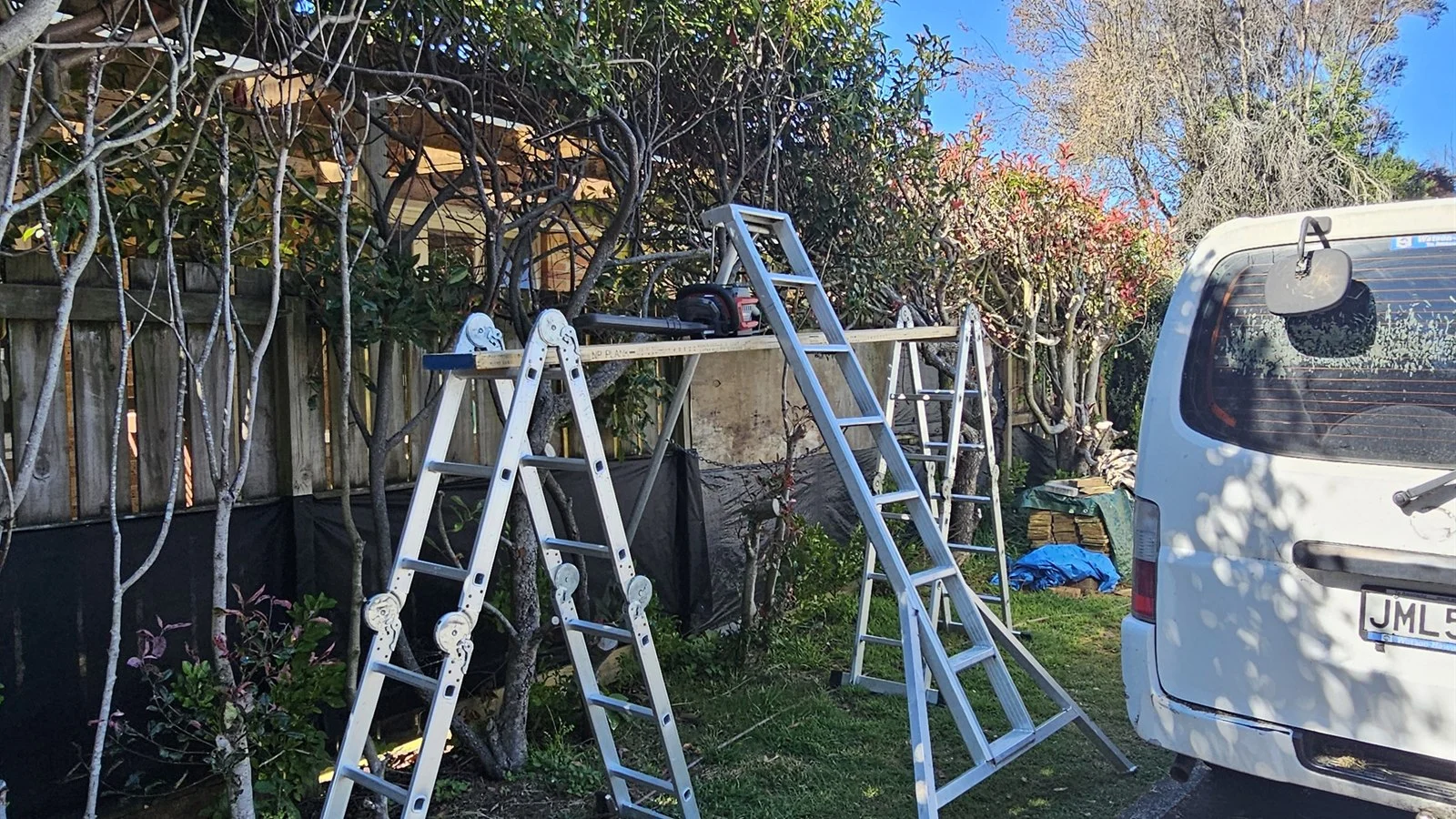
The extras that get you talked about are tiny. The garden strip that takes 30 seconds. The branch touching the van takes under a minute to cut. The street drain is full of leaves in autumn that you blow out on the way past. None of it goes on the invoice. All of it gets mentioned when someone asks, “Who does your lawn?”
Set a limit or it gets silly. Mine is under a minute, and no extra gear is off the van. Anything bigger is a quote, and I say so kindly.
More: How to keep your lawn care customers happy even on bad days
Do today: on tomorrow’s lawns, find one thing under a minute that the customer has been looking at for months. Do it and say nothing.
3. Leave the lawn looking finished.
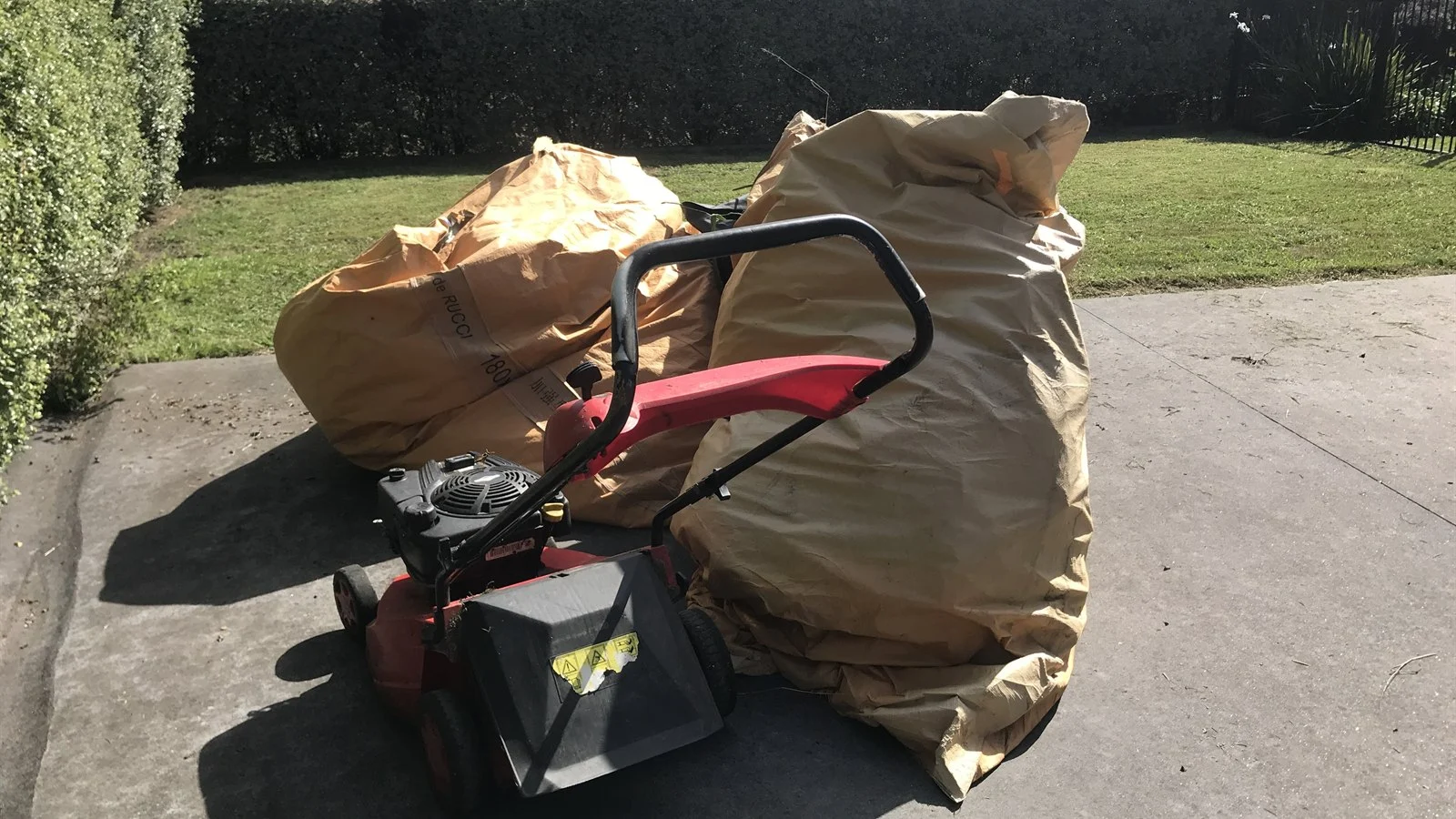
A customer does not refer a lawn that looks mowed. They refer to a lawn that looks finished. Edges done, path blown off, clippings gone. Every time, not most times.
One of my customers wrote this in a review: “The removal of the cuttings was an added bonus we had not had from any other business.” That is not a big thing to me. It was the thing she told people about.

The way to make it every time is to mow the same way on every lawn. Same machines, same order, same cut height on the job sheet. I call it the McDonald’s approach. The burger is the same in every town, and your lawn should be the same on every visit. Inconsistency is the second biggest reason customers drift off, and drifting customers do not refer anyone.
More: Lawn Care Customer Slippage: Retain Your Valuable Customers
Do today: write your standard finish down. Mower height, edge, blow, and clippings gone. Stick it in the van until you do not need it.
4. Ask every new customer where they found you.
You cannot run a referral program you cannot see. Every incoming call, I ask the same question at the end: “Where did you find my number?” It is one of the qualifying questions I ask on every lead, along with the address and whether they have a dog.
That question is how I know referrals bring me one or two a month. It is also how I know that Google Ads is my best paid spend and that flyers went from three replies in a hundred to one in five hundred. Without it you are guessing, and guessing is how people end up paying for referrals they were already getting for free.
When the answer is a name, write the name down. Then next time you mow that customer’s lawn, thank them. That is it. No reward, no card. “Thanks for sending Jenny my way; she is booked in fortnightly.” A thank-you is remembered longer than a gift card, and it costs nothing.
More: Dealing With Lawn Care Leads: Find The Best Customers
Do today: add “Where did you find my number?” to the notes on your phone where you take a new lead. Ask it on the next call.
5. Put a magnet on the fridge.
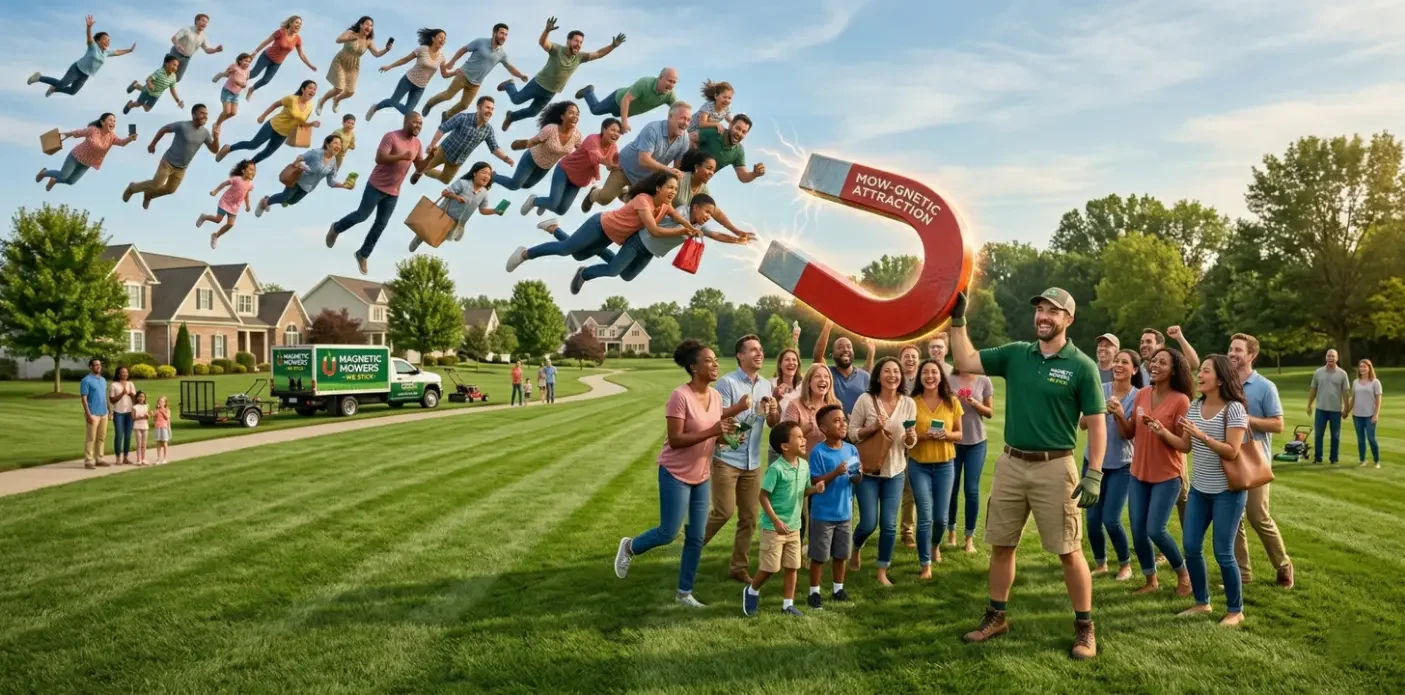
When a neighbor says, “Who does your lawn?” the customer has to find your number. If it is on a paper card, it went in the drawer months ago. If it is a magnet, it is on the fridge, in the kitchen, where that conversation happens.
I have used magnetic business cards from Vistaprint for years. A pack of 500 is under $150. I have had people ring me years after I quoted them because the magnet was still there. That is a referral tool that works while you are asleep, and it is the closest thing to a program I run.
Leave one on every quote, on every first mow, and at the door when nobody is home.
More: Seven Great Ways to Make Your Lawn Mowing Business Sticky
Do today: order magnets, not cards. If you already have paper cards, use them up on quotes and put the magnets on the fridge of every regular.
6. Mow the street, not just the lawn.
Most referrals are neighbors. They see the van, they see the lawn, and they see you every second week for a year. By the time they ask, they already trust you.
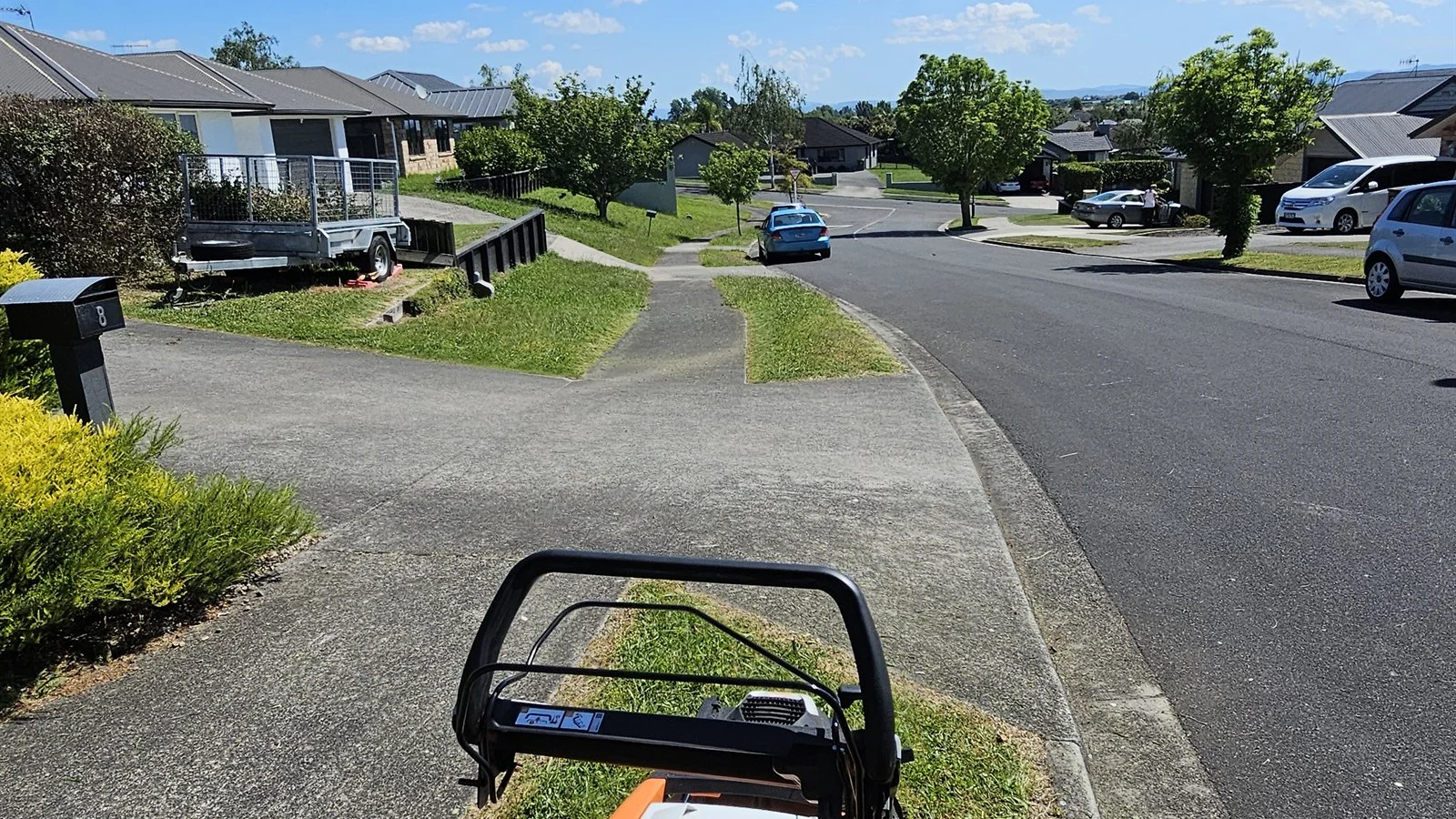
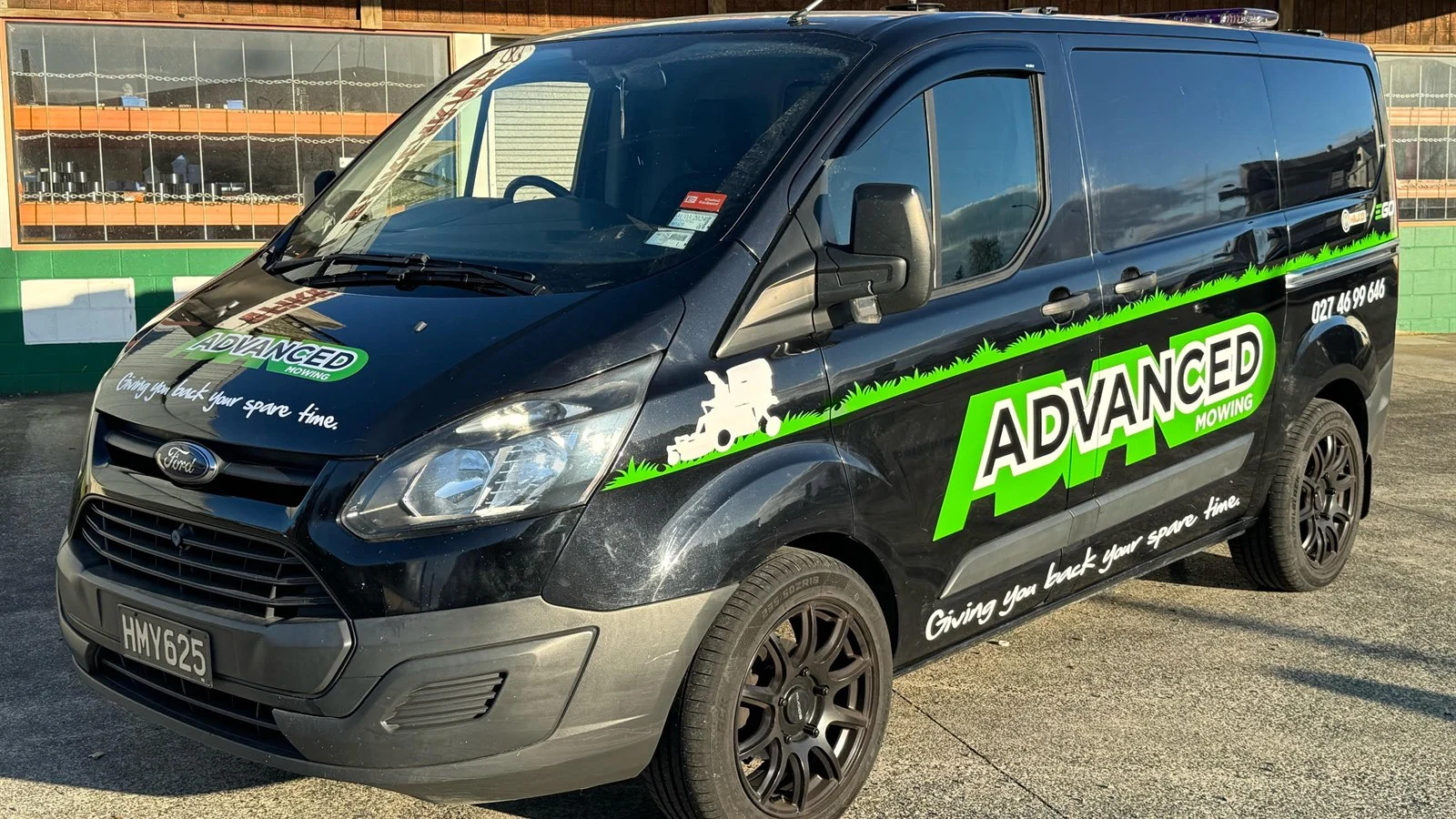
So work the street. When I pick up a new lawn, I door-knock five houses on each side and ten across the road. That is 20 doors, and it takes 20 minutes with the van parked out front as proof. A signwritten vehicle at the kerb does the rest of the talking. Cab doors at minimum, and a real sign, not a magnet that says you are not sure you will still be doing this next year.
Smile and wave. It sounds soft. It is not. The neighbor who waves back is the next quote.
More: Signwriting a Lawn Care Vehicle: Right First Time and 21 Great Ways to Market Your Lawn Care Business
Do today: on the next new lawn, knock the five on each side before you leave. Count the noes. Fifty noes is about one customer, so every no is progress.
7. Treat Google reviews as referrals from strangers.
A review is a referral to someone you have never met. My own listing has 87 Google reviews at 4.9 stars, and it sits first in the map pack for “lawn mowing Hamilton.” The two listings under it have 37 and 35. That listing brings in two to three leads a week all year round, and every one of them was referred by a review from a customer I asked.
I got there one customer at a time. After the first mow, when the lawn looks its best and they have just paid, I text them the review link with my name on it. I have never bought a review, and I have never offered anything for one.
The rules are simple. Ask by name, send the direct link, and ask once. And reply to the reviews you get, because the next stranger reads your replies as closely as the reviews.
More: Google Business Profile Guide for Lawn Care: Why You Are Not Showing Up
Do today: get your review link from your business profile. Text it to the last customer who thanked you for the lawn.
8. Swap work with the trades you do not compete with.
Not every referral comes from a customer. Some of the best come from other contractors.
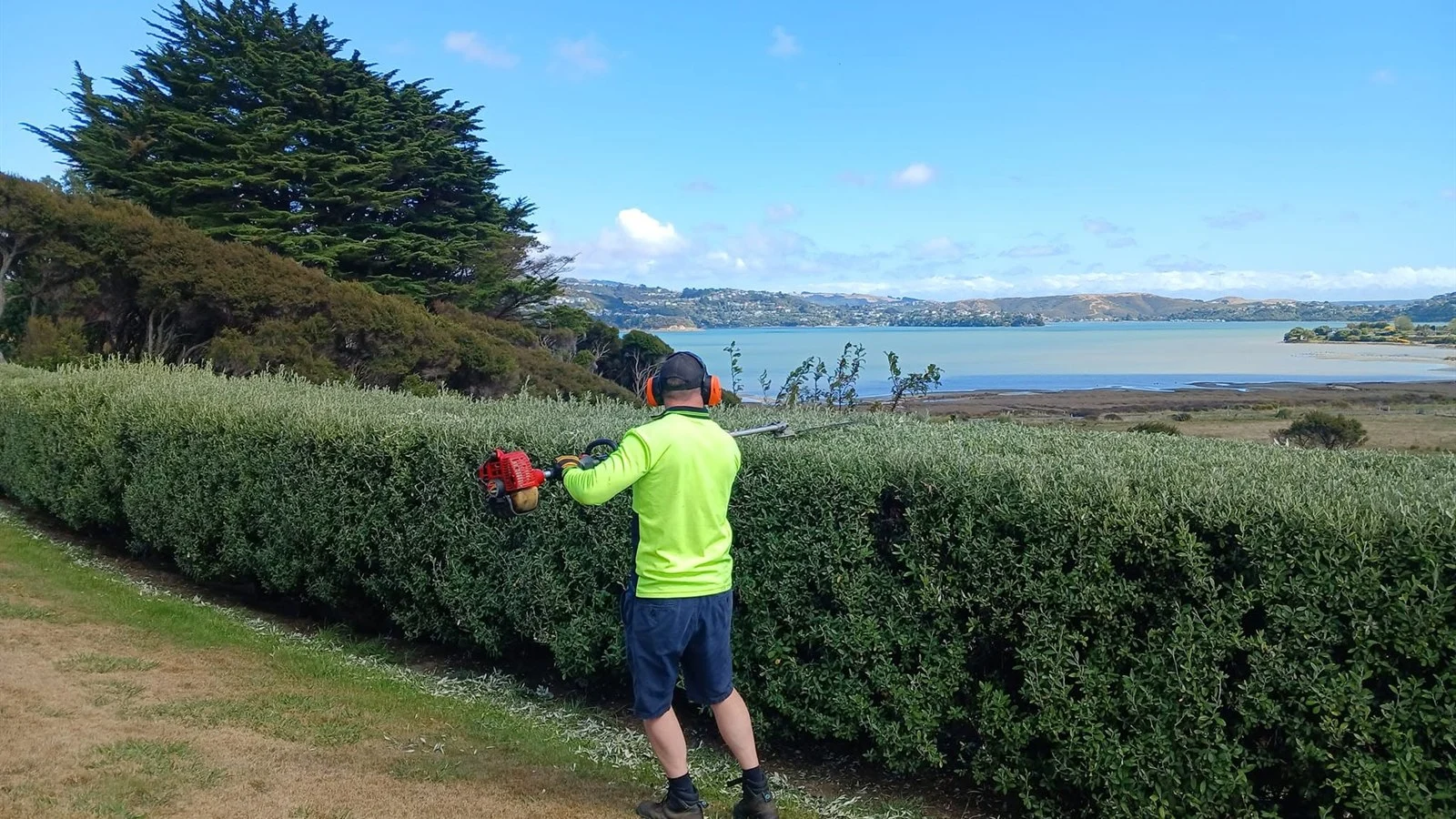
I get calls for gardening, hedges, trees, rubbish, and a couple a month for lawn treatments I do not offer. Saying “no, sorry” and hanging up costs me that customer’s trust. So I have a list. We hate gardening, so we do not do it. But we know someone who loves it, and they do not mow lawns. We send them work. They do the same.
I built that list on the job. The mower repair shop. The green waste dump. The stump grinder turned up on a property while I was mowing it, and I walked over and got his card. If you would rather not wait for luck, search Google Maps for the well-reviewed local trades and ring them.
Two strikes. If a contractor does not follow up on a lead I sent, I remind them once. The second time, they are off the list. The customer gave me their trust, and I passed it on, so the person I passed it to has to look after it.
More: Lawn mowing leads, a big mistake! Are you leaving money on the table?
Do today: write down the last three jobs you turned away. Find one trade for each, ring them, and ask if they want the next one.
9. Sell the leads you cannot take.
This is the referral program that pays you, not the other way round.
When my round is full, I still get calls because the website and the Google listing keep working. I sell those leads to another local operator for $20 each. Over the last couple of years that has come to about $2,000 a year. The best year was $10,000, but that was a peak, not the norm.
The buyer responds within the hour because he paid for the tip. A free lead gets left until tomorrow. A paid one gets rung from the driveway. And the customer still gets looked after, which is the point.
Two conditions. It only works alongside advertising, because the lead volume comes from the ads and the listing. And the buyer has to be exclusive and fast, or the customer rings the next name and you have sold them nothing.
More: 9 Ways to Get New Lawn Care Customers Fast
Do today: if you are full and still getting calls, ring one operator you trust and offer the next lead for $20. Text it to them, and give them ten minutes to ring it.
The pattern behind all nine
None of the nine involves a reward, a code, a form, or a card. They all come down to the same thing. The customer has a story to tell about you, and your number is easy to find when they tell it.
Turning up, the garden strip, the clippings gone, the wave. That is the story. The magnet, the van at the kerb, the review link, and the thank-you. That is the number.
The companies selling referral programs need the reward because the story is missing. If the only reason a customer would recommend you is the $25, the problem is not the referral program. It is the lawn.
Do the nine, ask where every customer came from, and watch the answer change to “my neighbor.”
Frequently asked questions
Should I pay for referrals in my lawn care business? I do not, and I have not needed to in 30 years. A paid referral brings the friend who came for the reward. A referral earned on the lawn brings the friend who wants the same lawn. I get one or two a month without paying anyone.
How many referrals should a lawn care business get? One or two a month is what I get from a full round without asking. If you are getting none, it is not a reward problem. Check that you are turning up when you said, that the lawn looks finished every time, and that your number is on the fridge.
Is it allowed to offer a discount for referrals? Yes. Google bans paying for reviews and can strip a listing for it, but a referral thank-you is your own business decision. I choose not to, because discounts attract the customer who is only there for the price.
What is a lawn care customer worth? On my round a regular is 21 cuts a year, which allows for the winter slowdown. At $45 a cut that is $945 a year. In the US, where you sell weekly for the season, do your own math with your cut count and price. Either way, one referred regular is worth more than any reward you would pay for them.
How do I ask a customer for a referral? I do not ask. I make it easy instead. A magnet on the fridge, my name on every text, and a thank-you the next time I mow when a customer sends someone. If you want to ask, do it once, after a mow they were clearly happy with, and never with a reward attached.
Do Google reviews count as referrals? Yes. A review is a referral to a stranger. My listing has 87 of them, and it brings in two to three leads a week all year. Ask after the first mow, by name, with the direct link, and ask once.
Should I refer work I do not do to other contractors? Yes. Saying no and hanging up costs you that customer’s trust. Keep a short list of trades you do not compete with, send them the work, and expect the same back. Remind them once they drop a lead. Twice, and they are off the list.
Can I sell leads instead of referring them for free? Yes, once you are full and still getting calls. I sell mine for $20 each, about $2,000 a year lately. It only works if you are advertising, because that is where the extra leads come from, and the buyer has to ring the lead within minutes.
Next step
Pick two of the nine and do them tomorrow. Ask, “Where did you find my number?” on the next call, and put a magnet on the fridge of the next lawn you mow. Then count the referrals for the next three months. I think you will stop looking for a program.
If you want the rest of the system, the phone script, the texts, and the marketing I actually run, it is all in my free community of lawn care business owners. I am in there daily. I also run a Facebook group of more than 180,000 lawn care businesses worldwide, so whatever is not working for you, someone in there has already fixed it.