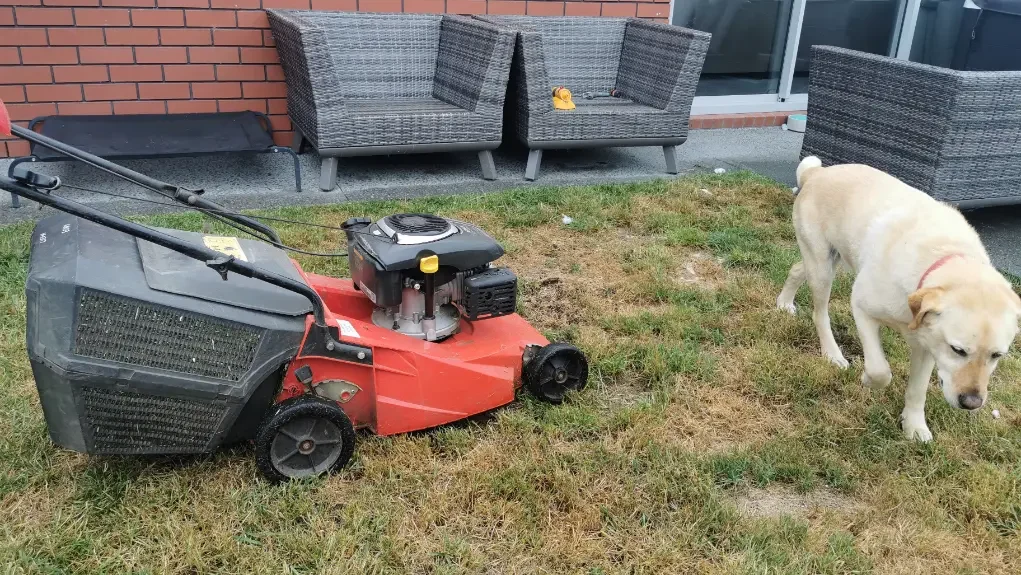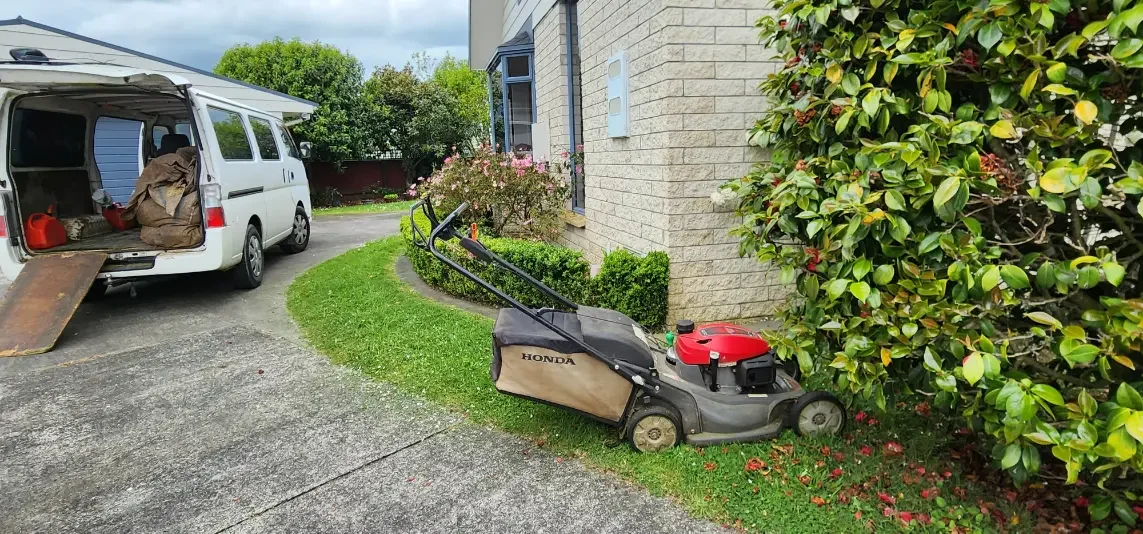


Most lawn businesses do not fail in winter. They fail in the spring after it, because of what they did not do in winter.
Here is a bloke on LawnSite, second year full time, laying it out honestly:
“All of my weeklys by about the end of november are now bi-weeklys untill leaves stop falling by about dec-january. Some cancel service until next spring. Does all of this sound normal? … Im in a bind here, not sure if i should quit this and just get back into a ‘normal’ job.”
Yes, it sounds normal. That is the problem. Most people treat the off season as weather that happens to them, ride it out, burn the savings, and start again in spring with a smaller round than they finished with.
I have been doing this since 1992. I built three lawn businesses from scratch, took the last one to 450 customers, then scaled back to 200 in 2017. I still mow my own round in Hamilton and it turns over about $2,000 a week on roughly 20 hours.
One thing to sort out first, because winter is not the same job everywhere.
In the southern states, the UK, Australia or New Zealand like me, the grass slows but never stops, and you keep mowing on a stretched cycle right through. In the snow belt it stops dead. You cannot mow in January in Minnesota no matter how good your system is, and I have never plowed snow in my life so I am not going to pretend otherwise.

But seven of the nine below are not about mowing at all. They are about holding your customers, holding your cash and pricing the year properly, and they matter more to you than to me, because you have fewer months to make the year’s money in. Where the two climates need different moves, I have said so.
Here are the nine, in the order they matter.
1. Stop the round shrinking. That is the whole job.
Every other point on this list is worth less than this one.
What you lose in winter is not really the mows you skipped. It is the customers who dropped off and never came back, and the ones you did not sign because you stopped looking.
My rule is simple. About 70% of my customers stay on a two-week cycle all year round. Not weekly in summer and nothing in winter. Every two weeks, right through.
The grass does slow. In winter I am mowing most lawns every two to four weeks, and I never take more than a third of the blade off in one go. But the visit does not stop. Once the visit stops the relationship stops, and in spring you are a stranger ringing them for their business back.
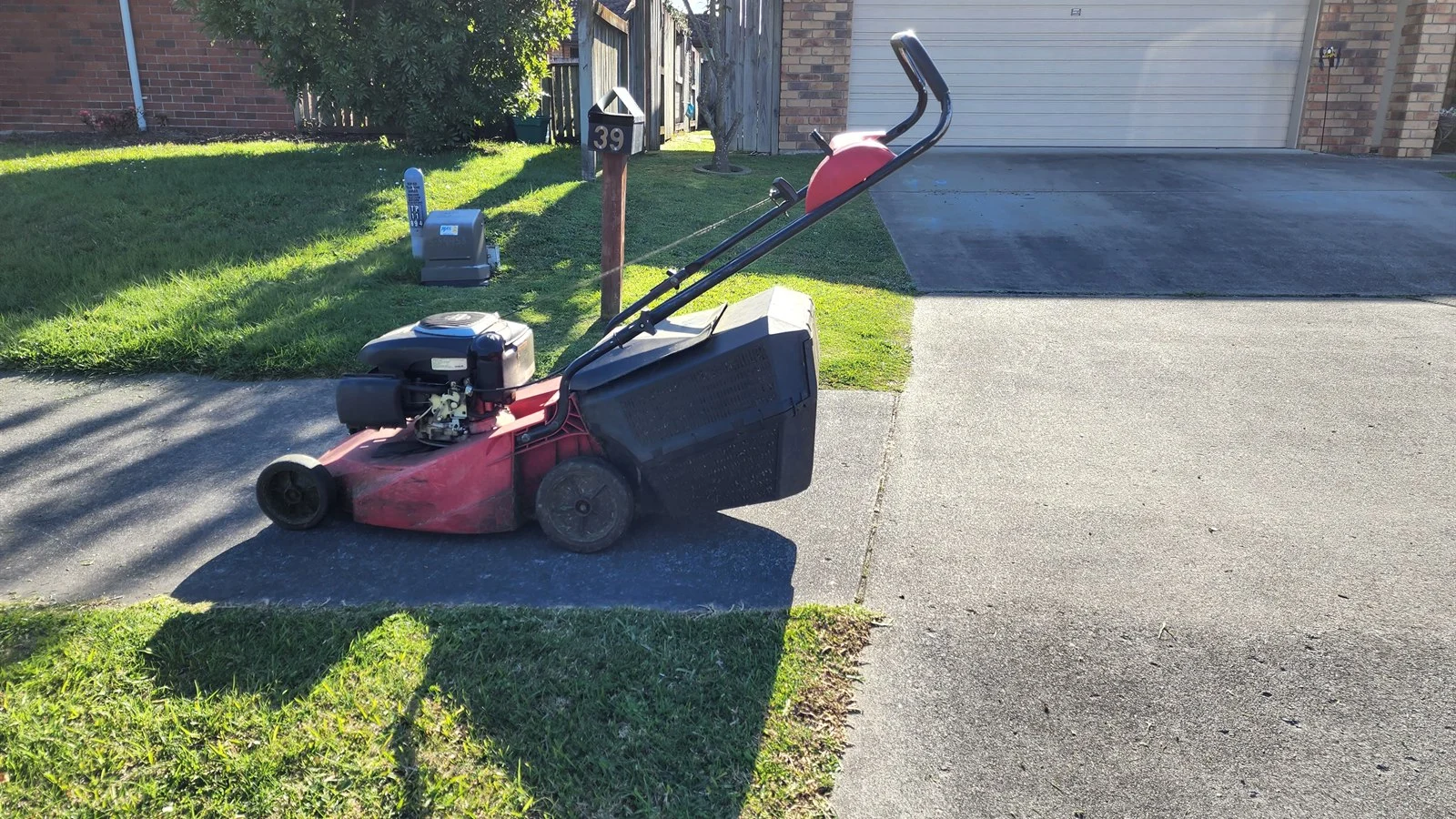
The signs a lawn has hit its winter cycle: thinner blades, duller color, fewer clippings, spongy ground, more weeds. That tells you to stretch the interval. It does not tell you to drop the customer.

If the ground freezes and you cannot mow at all, the principle holds and the tool changes. The visit keeps the relationship alive, so put something in its place. A leaf clean up in November. A text in January. A spring start date confirmed in February, before your competitor knocks.
The strongest version came from an operator in that thread: put customers on a twelve month agreement, tally the year’s work, split it into twelve equal payments. Someone pushed back with “Yea but what if there is only 9 months worth of work?” You charge for nine months and spread it over twelve. You are smoothing the payments, not inventing work. They get a bill that never spikes. You get income in February.
More: How Do You Manage Those Winter Lawns? and Lawn Care Customer Slippage
Do today: open your customer list and mark everyone who went quiet last winter. That number is your real off season problem.
2. Set the cycle at signup, not when it gets cold
You cannot negotiate a year-round cycle in the middle of winter. They are looking at grass that is not growing and you are asking for money. You will lose that one.
So you do it at the start. When a new customer says yes, you tell them the cycle then: weekly, every two weeks, or monthly, running all year with the gaps stretching out over the cold months. One sentence at the moment they are keenest, and it saves you the argument later.
I have never used written agreements, only verbal ones, and in thirty years that has been fine. But verbal only works if you actually said it. Most winter cancellations are not customers breaking their word. They are customers who were never told.

Anyone already on your books who has never heard this gets told at the first cut of the season.
More: Lawn Care Agreements With Customers: Do You Need One? and Seven Great Ways to Make Your Lawn Mowing Business Sticky
Do today: write the one sentence you will say to the next new customer about the winter cycle. Save it in your phone.
3. Price on the cuts you actually do in a year, not on 52
This is the number that fixes most of the panic, and almost nobody has worked theirs out.
A regular customer on my round is worth about 21 cuts a year. That figure already has winter in it. It is not 52 weekly mows and it is not a summer number that collapses in June. It is the year, dips included.
Run the math on it. 100 customers x 21 cuts x $45 is $94,500, which lines up with my own round at about $2,000 a week.
Twenty one is my number, not yours. Mow weekly for eight months and not at all for four and yours might be 30. Go back through last year’s invoices and count the actual visits on ten customers. That average is the only figure worth building a price on, and a shorter season means each cut has to carry more of the year.
Two mistakes come out of getting this wrong. The first is discounting for winter on top of a price you already set on a yearly average. You are taking the dip off twice.
The second is the forecast blowout. One new client a week is the realistic pace for an active operator. That is roughly 50 clients after a year, not 50 lawns a week. Mix those up and your forecast doubles on paper and then disappoints you in July.
A bloke on that forum thread put the practical version best. “You should have a daily $ needed to float the boat.” Know that figure before winter, not during it.
More: How to Quote on Lawns, the Complete Guide and Are You Charging Enough for Your Lawns?
Do today: work out your daily number. Weekly costs plus what you need to live on, divided by the days you actually work.
4. Sell to the customers you already have
Your cheapest winter income is already in your phone.
I have emailed my whole customer base in the fall offering leaf removal and lifted that month’s income by as much as 25%. No advertising, no quoting strangers, one email to people who already trust me.
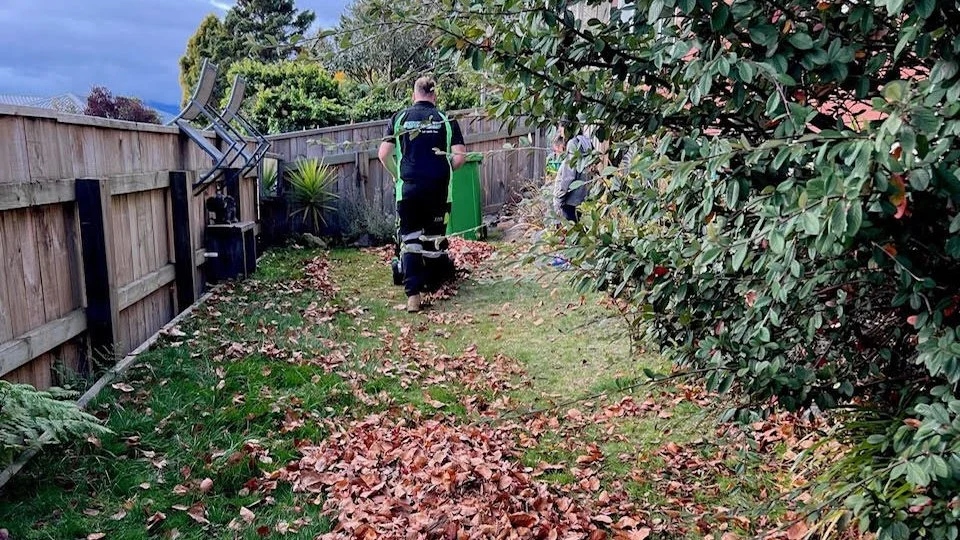
My winter list: leaf clearing, hedge trimming, one-off tidy ups, yard clean ups, pressure washing paths and driveways, gutters, path and driveway spraying. All of it is work the customer needs anyway, and all of it is easier to sell to someone who knows your van.
If your ground freezes, that list looks different, and the operators who do it were specific about what pays: leaf clean ups in the fall, hanging Christmas lights and taking them down again, gutter cleaning, window cleaning, tree and shrub trimming while there are no leaves in the way, firewood, junk hauling. One bloke has been hanging lights and putting up Christmas trees for years.
Snow plowing is the obvious one and it is the one they warn about. As one put it, snow revenue is too unpredictable to lean on. Another gave up owning the gear and now subs the plowing out and takes a cut.
I have not done that work, so I will not tell you how. But the test is the same as mine: does it sell to customers you already have, and can you do it with gear you already own. Christmas lights pass easily. A new plow truck does not.
Two warnings, both learned the hard way.
Do not add a service you have no gear for or do not enjoy. Nine out of ten of the jobs I took on early that I was not comfortable with turned into drama.
And do not spray a lawn without the license. A kindergarten’s long-time contractor sprayed a lawn, killed it, and found his insurance would not cover him. Path and driveway spraying is a fine add-on at $2 to $3 a minute. The lawn itself is a different job with a different risk.
More: Upselling Lawn Care Customers Can Unlock More Profits and The Perfect Lawn Care Service List
Do today: write one short email to your whole list offering the one winter job you are already set up to do. Send it this week.
5. Keep quoting through winter, because nobody else is
This one is free and almost everybody gets it wrong.
Winter is when your competitors stop advertising, stop answering the phone and stop turning up to quote. The leads still exist. There are fewer of them and there is almost nobody chasing them.
So keep the machine running. Your Google Business Profile still wants a post a week and a photo of real work. A properly set up profile brings me 2 to 3 leads a week, all year round. Not just spring. That is the point of it.
Answer in three rings. Quote the same week. Put them on the year-round cycle from point 2. By spring they are an established customer instead of a lead you are fighting the whole town for.
If you cannot mow yet, you are not quoting a mow. You are booking spring. Same call, same price, and you put a start date on it. A homeowner who has already agreed a date in February is not ringing three other operators in April.
One a week through a three month winter is a dozen customers your competition never saw.
More: Google Business Profile Guide for Lawn Care and 9 Ways to Get New Lawn Care Customers Fast
Do today: post one photo from this week to your Google Business Profile, with a Call Now button on it.
6. The spring clear-out: sell the lawns you cannot fit
Here is what all of that adds up to, and it is the part nobody tells you.
Hold the round through winter, take the one-off work, keep signing new customers, and when the season starts and everyone comes back at once, you do not have a gap. You have too much work.
That is a real problem with a very good solution.
In August this year I packaged 30 lawns off my own round and sold them to another Hamilton lawn business for $7,200. That is $240 a lawn. They were my lowest paying lawns, they were the ones I could not fit, and someone else was glad to have them.
This happens every year, right at the start of the season. The choice is always the same: let the worst-paying lawns go, or package them and sell them. One of those pays you.
Do not read $7,200 as a number you will hit. That is my round, built over decades at my prices. Read it as proof the mechanism is real. The round gets tighter and better paid instead of just bigger, and the seasonal dip becomes a yearly cash event.
More: How to Value and Sell a Lawn Care Business and Make Big Money Mowing Small Lawns
Do today: sort your customer list by price per hour. The bottom ten are next spring’s clear-out.
7. Build the winter float before you need it
None of this works if you are broke in the quiet months.
Budget with a 25% buffer and put money aside while the money is good. Hardly anyone does it, because summer feels like it will last.
A guy on LawnSite had the simplest version I have read: “For me I just make sure to have about 10 grand at the end of December and it’s generally more than enough to last the winter.” He knows his number and he hits it. That is the system.
Build the chart. Month, opening balance, cash in, cash out, closing balance. Fill the quiet months in honestly, then run the what-ifs. What if the mower dies. Over 70% of small businesses hit a cash pinch at some point, and the ones who survive saw it coming on a page.
Pay yourself a fixed weekly amount all year. I have done that for over a decade. Irregular drawings make you look unbankable and make a quiet month feel like a crisis.
Chase your money before winter, not during it. Do not mow again for someone who has not paid. I know a contractor who got three months behind on a dozen jobs and landed in real trouble.
More: A Lawn Care Business Cash Flow Chart Equals Profit and Are Your Customers Paying On Time?
Do today: pick your end-of-season float number and write it down. One figure.
8. Do the jobs that only fit in a quiet month
Winter is the only time of year that hands you hours back. Most people scroll them away.
Service every machine. Blades sharpened and balanced, oil, air filters, cables lubed, wheel bearings, catchers pressure washed, and check the mower cuts level. In spring you will not have a spare hour for any of it.
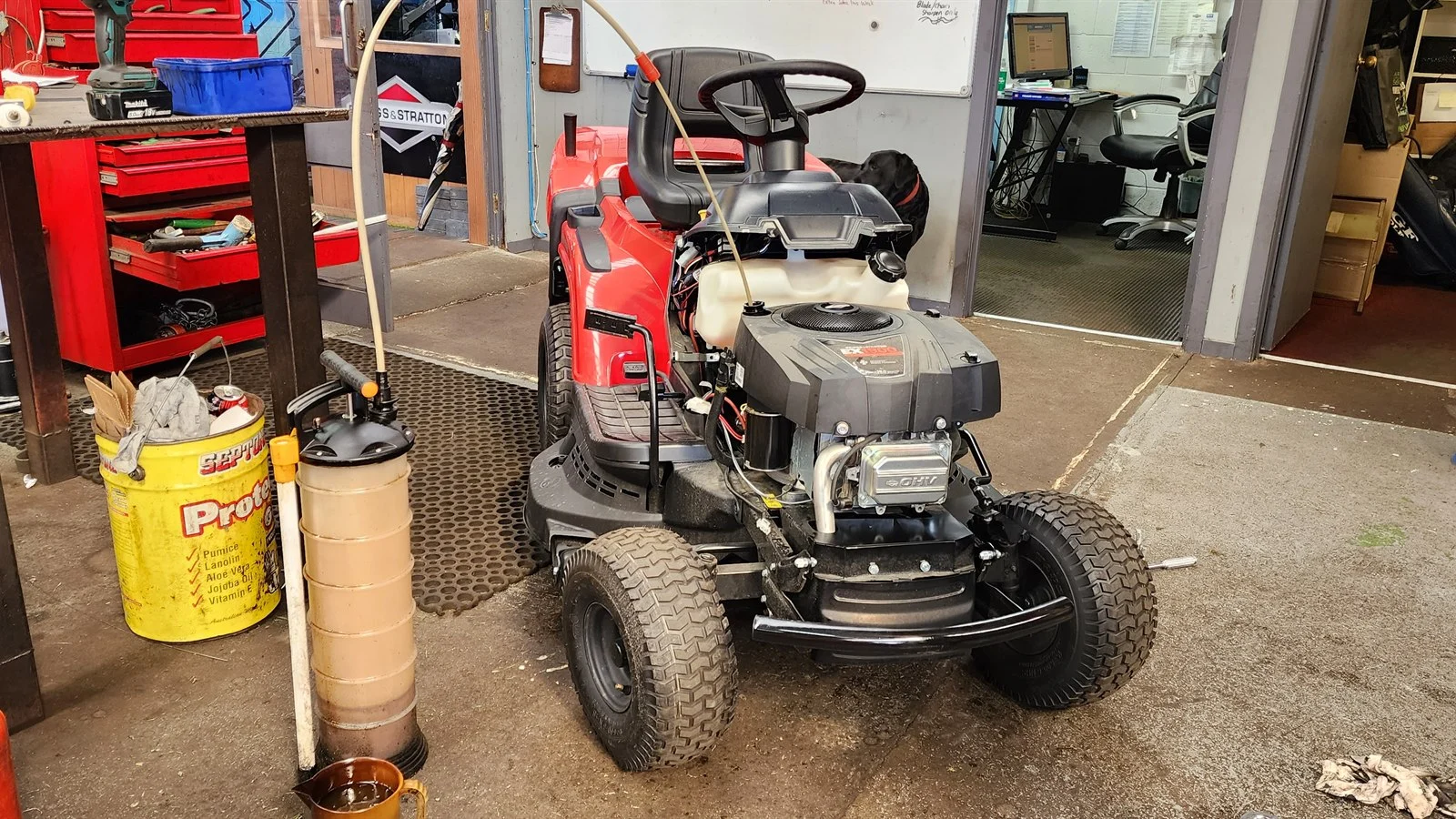
Sort the backup. I run one more mower than I need. I never buy new machines as backups. I keep the old one when I upgrade and buy the same make and model each time so the parts swap over. I have cannibalized four old machines. I also carry spare spark plugs, because the shop changes the plug first and it fixes the thing nine times out of ten.
Fix the website and the profile. Open your own site on your phone, on cell data rather than wifi, and time it. If a homeowner cannot find your number in five seconds, the ranking is wasted.
Replan the route. Set suburbs on set days. Fifteen minutes of travel between lawns eats your profit, and cuts what the business is worth when you sell.
More: The Best Backup Equipment for a Lawn Care Business and What Is the Best Way to Plan My Daily Lawn Care Route?
Do today: book the mower in, or pull the blades off tonight and sharpen them.
9. Put your prices up on the way into spring
The off season ends with one job and it is the one everybody skips.
You raise prices before the season, not during it. A customer takes a new rate at the first cut of the year far more easily than in the middle of a busy summer.
From that same thread: “I raised my rates 15 to 20 percent across the board this year and didn’t lose but one customer.” That is the normal result, not a lucky one. People who like your work do not leave over a few dollars.
I do not send a blanket letter to everyone. I do one lawn a week, by text, all year. It is invisible, it never becomes an event, and by the end of the year the whole round has moved.
One a week is 50 a year. Small, constant, boring, and it compounds.
And if you ever plan to sell the business, the few weeks before spring is the moment. A round with fresh prices, a tight route and customers who did not vanish over winter is worth a lot more than one you are trying to sell in July.
More: Lawn Care Price Increase Letter: The One I Actually Send and Lawn Care Business Income, How Much Should You Pay Yourself?
Do today: pick one customer who is underpriced and text them the increase.
The pattern behind all nine
Every one of these is the same move: treat the year as a year.
The operators who struggle run a season and then survive the rest. The ones who do well run a twelve month business that happens to stop mowing for a while. The cycle is agreed at signup. The price is built on the cuts you really do. The float is saved in summer for the quiet months. The prices go up before the first cut, for the year ahead.
That works whether your winter means a stretched two-week cycle or four months of frozen ground. The mowing is seasonal. The business does not have to be.
Nothing here is clever. It is all boring, and it all has to be decided before the grass stops growing.
Winter does not decide whether you make money. Last summer did.
Frequently asked questions
What do lawn care businesses actually do in the winter? In a mild climate they keep mowing on a stretched cycle. In a cold one they switch to leaf clean ups, Christmas lights, gutters, tree work or plowing. Either way the ones who do well also sell one-off work to existing customers, keep quoting while nobody else is, and service their gear. The ones who did not plan get a part time job.
What if I genuinely cannot mow for four months? Then the mowing points do not apply and the other seven matter twice as much. Put customers on twelve equal monthly payments so income does not stop when the work does. Book spring start dates early. Sell a service you can deliver with gear you own. Save the float in summer. Raise prices before the first cut.
Should I offer snow removal or some other winter service? Only if you own the gear already and want the work. The operators who plow will tell you the revenue is unpredictable, which is a hard thing to build a winter on. Christmas lights, gutters, window cleaning and leaf clean ups need almost nothing new and sell to people who already know you. If you do want plowing, subbing it out and taking a cut is a real option.
How do I stop customers canceling over winter? Tell them the cycle when they sign up, not when it gets cold. About 70% of mine stay on a two-week cycle all year because that is what they agreed to at the start. If you cannot mow through, use twelve equal monthly payments instead. Either way you win that one in advance or not at all.
Should I discount my prices in winter? No. If you priced on your real yearly cut count, the dip is already in your price. And if your season is short, each cut has to carry more of the year, not less.
How much should I have saved before winter? Whatever your quiet months cost, plus a 25% buffer. Work it out on a cash flow chart instead of guessing, and pick the number while the money is still coming in.
Is it worth advertising in the off season? It is the cheapest advertising of the year, because your competitors have stopped. My Google Business Profile brings 2 to 3 leads a week all year round, not just spring.
Can I really sell the lawns I cannot fit? Yes. I sold 30 of mine for $7,200 in August to another local operator. Package your lowest-paying lawns, sell them to someone building a round, keep the ones that pay.
When is the best time to raise prices? Just before the season starts. Better still, one lawn a week all year so it never becomes an event.
Next step
Do one thing this week. Open your customer list, find everyone who went quiet last winter, and count them. That number is what the off season is actually costing you, and it is usually bigger than people expect.
Then come and tell us what you found. I run a free community of lawn care business owners working through exactly this, and I am in there daily. I also run a Facebook group of more than 180,000 lawn care businesses worldwide, so whatever you are stuck on, someone has already been stuck on it.