
Keeping the Blades Turning: The Art and Science of Mower Maintenance
I’ve got a new Lawn Master mower that I have been using for the last month or so. It catches wet grass like a breeze, but I do have problems with my mulching. It packs itself so solid with grass that the mower dies in the middle of the lawn. I don’t know if you have ever tried to pull-start a mower that’s packed solid with grass. It is a complete waste of time. The chances are that you will not even manage to move the pull cord.
It’s time for a complete clean-out—a job that I hate doing anytime, especially in the middle of a lawn.
When your equipment fails in the field, your hourly rate plummets. Every minute spent scraping out a deck is a minute you aren’t earning. In the professional lawn care industry, a clean mower isn’t just about pride; it’s about mechanical survival and operational efficiency. If you want to keep your business profitable, you have to master the “clean as you go” philosophy while respecting the anatomy of your machine.
The “On-The-Job” Clean Out: Speed vs. Safety
I have a cleaning system where I fold the handle and lift the mower from the front. I then proceeded to remove all the grass so I could continue working. This is the most efficient way to clear a blockage without causing secondary engine issues, but it’s where many beginners make their first fatal mistake.
When I had workers, I always had to explain to them that when you cleaned a mower, you needed to point the spark plug skyward. (After disconnecting it, of course.)
I see a lot of people out and about that have no idea about how to clean under a mower. You can always spot them because they roll the mower on its side. In the heat of a busy day, it’s tempting to just tip the machine over like a toy, but your engine is a complex system of fluids that rely on gravity to stay in the right place. Tilting a mower the wrong way will have one of two possible outcomes:
- The Oil Flood: It will flood the engine with oil and drown you in a cloud of white smoke when you start the mower. This happens because oil escapes the crankcase and enters the cylinder head or the exhaust. Not only does this look unprofessional in front of a client, but it can also carbon up your spark plug.
- The Filter Soak: It will flood the air filter. A wet air filter—saturated with oil or fuel—will prevent the mower from starting because it can no longer “breathe.”
Neither of these things will kill your mower, but I would not recommend either. There is nothing more embarrassing than a “professional” standing on a client’s lawn, tugging fruitlessly on a cord while a cloud of acrid white smoke drifts into the neighbor’s yard.

Why Modern Mowers Struggle with the “Pack”
My Testarossa hardly ever got clogged up. I miss that machine more every day. The reality of modern mower design is that many decks are designed for high-velocity catching, but they struggle with the aerodynamics required for “munching” (mulching) in damp conditions.
When you mulch, the grass is suspended in the deck to be cut multiple times. If the deck is already coated in a layer of old, dried clippings, the new wet grass has something to “grab” onto. This creates a snowball effect. The deck gets smaller, the airflow decreases, the grass stops circulating, and eventually, the engine chokes under the weight of the debris.
Pro-Tip: The “Non-Stick” Strategy
To prevent the mid-job meltdown, consider applying a silicone-based spray or a specialized deck coating to the underside of the clean, dry mower before you start your day. It won’t stop all buildup, but it makes the “front-lift” cleaning method much faster as the grass slides off rather than bonding to the metal.
The End-of-Day Ritual: Off-the-Job Cleaning
While on-the-job cleaning is about clearing blockages, off-the-job cleaning is about longevity. Grass is surprisingly corrosive. It contains moisture and acids that, if left sitting against a steel deck overnight, will eventually rot the metal from the inside out.
1. The Wash-Down
Most modern mowers come with a wash port—a little nozzle where you can attach a garden hose. While these are better than nothing, they are rarely 100% effective. The best way to clean a mower off-the-job is still the manual way.
- Wait for the engine to cool (spraying cold water on a hot aluminum block is a recipe for a cracked casting).
- Tip it correctly (Spark plug up!).
- Use a plastic scraper. Avoid metal scrapers if you can, as they scratch the paint and create more “grip” for the next day’s grass.
2. The Air Filter Check
If you’ve been working in dry, dusty conditions, your cooling fins and air filter will be choked with fine debris. After a wash, take a minute to blow out the cooling fins with compressed air or a leaf blower. Overheating is the silent killer of small engines; a clean engine is a cool engine.
3. Blade Maintenance
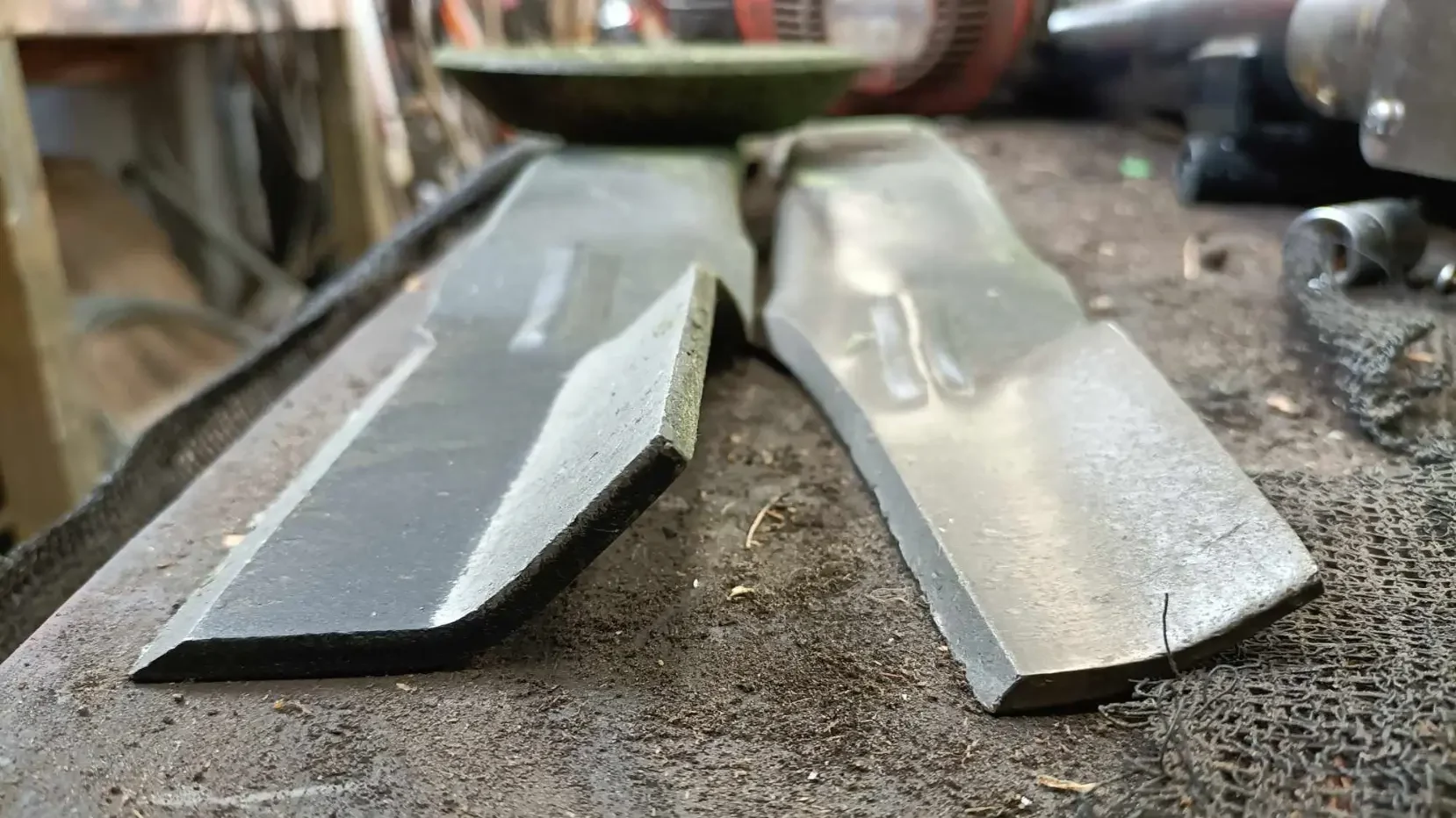
Cleaning the deck is the perfect time to inspect your blades. A dull blade doesn’t cut; it tears. Torn grass turns brown at the tips, making your professional job look amateur within 24 hours. Furthermore, a blade that is “out of balance” due to a heavy chunk of dried grass stuck to one side will cause vibrations that destroy your engine bearings over time.

The “Good Old-Fashioned Service” Standard
One of the reasons that our business name actually ranks in the top five Google searches in our area is that we maintain our equipment. A clean mower produces a clean cut. If you show up to a property with a machine that is caked in mud and grass from the previous three jobs, you are signaling to the customer that you don’t care about the details.
If you want a good business, then you need to set high standards and stick to them. This includes how you treat your tools. When your mower is packed solid and dies, it’s a sign that the “standards” have slipped. You’ve pushed the machine too far without a check-up.
Stopping to fix something that isn’t right—whether it’s a pile of grass on the driveway or a clogged deck—is what separates a “lawn guy” from a “lawn care professional.” It’s a real pain to stop in the middle of a job, get out the scraper, and clear the deck. But if you aren’t happy with how your machine is performing, how do you expect the customer to feel about the finished result?
Final Thoughts for the Industry
It would be a great thing for the industry if we all had high lawn mowing standards, and that starts with the machine. Whether you are running a brand-new Lawn Master or an old Testarossa that refuses to quit, the rules of physics don’t change. Keep the oil out of the filter, keep the spark plug to the sky, and keep that deck clear.
In the end, we aren’t just cutting grass; we are providing a service that relies on the reliability of our gear. A well-maintained mower is your most loyal employee. Treat it with respect, keep it clean, and it will keep you in the top five.