
Most of the lawn care text message templates on the internet were written by software companies to sell you a subscription. Mine were written on a phone, in a van, between lawns, and they have run my round for years.
I have been in lawn care since 1992 and built three lawn businesses from scratch. I still mow my own round in Hamilton, New Zealand, under the Gecko Lawns name. Nearly everything that happens with a customer, from the first quote to the day I put their price up, happens by text. Not because I am into technology. Because a text gets answered and a phone call does not, and because a text with the price and the address in it is a record I can look back on.
One customer put it better than I could in a review a few years back: “having the text communication to organise payment made everything easy.” That is the whole idea. Easy for them, and I get paid.
You do not need software to do any of this. Every text below can be sent from the messages app on the phone you already own. Save them as notes, fill in the brackets, send.
Here are the nine, in the order they happen with a real customer.
1. The quote text when nobody was home
You drive out to look at a lawn, nobody answers the door, so you measure it up and leave. Most people write it off. I text it.
Hi, [Your Name] from [Business Name]. We called in today to look at your lawn at [Address]. It would be $[Price] for a regular fortnightly cut. If this suits, please let me know and I will book you in.
Two things in that text do the work. The address, so they know you were at the right house and not next door. And the price, in writing, before the next quote arrives.

In the US, swap “fortnightly” for “weekly”, because that is how you sell the season over there. Everywhere the grass grows all year, fortnightly is the cycle, stretching out to three or four weeks in winter.
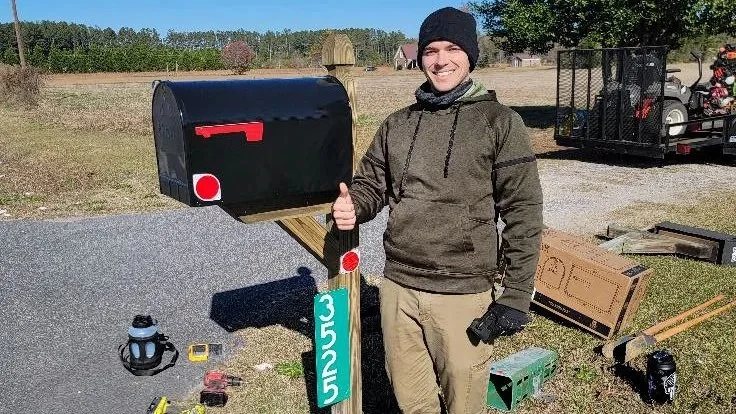
Leave a magnetic card at the door too. People have rung me years later because it was still on the fridge.
More: How to Quote on Lawns, The Complete Guide and Seven Great Ways to Make Your Lawn Mowing Business Sticky
Do today: save this text as a note on your phone with the brackets left in. Next time nobody is home, you are sending it from the driveway.
2. The quote confirmation at the end of the day
When I quote someone face to face, they say “I’ll let you know” more often than they say yes. That is fine. Most of them are ringing three or four businesses. The one who follows up in writing usually gets the job, because the others never do.
So at the end of the day, this goes out:
Hi, [Your Name] from [Business Name]. Just a quick text to confirm that the quote is on the lawn at [Address]. It would be $[Price] for a regular fortnightly cut with a catcher or $[Price] to mulch. If this suits, please let me know and I will book you in.
There is a stat I have quoted before, from Forbes, that businesses lose up to 71% of their leads by not following up quickly. I believe it. This one text, sent the same day, has won me a lot of jobs from people who were still ringing around.

One text. Not three. Chasing makes you look short of work.
More: Dealing With Lawn Care Leads: Find The Best Customers
Do today: look back at the last quote you gave that went quiet. If it was inside the last week, send this text now.
3. The prepay text for one-off jobs
A one-off job is the one most likely to leave you unpaid. You mow it once, they have no reason to see you again, and the money never turns up. So one-offs pay before I start.
Hi, [Your Name] here from [Business Name]. My account details are [Bank Account Name and Number]. Please use your address as a reference and send through the receipt when done. I will book your lawn as soon as your payment shows. Thanks.
I have sent this text for years and about 99% of legitimate customers do not blink. The ones who argue about paying upfront are, nearly every time, the ones who would not have paid afterwards either. The text is doing your screening for you.
I set a minimum on one-offs as well. Sixty dollars is where I start. A one-off at $30 costs you a regular customer’s slot and you will never see them again.
More: Spot a Bad Lawn Care Customer: 11 Red Flags

Do today: decide your one-off minimum and put it in this text. Then every one-off from now on pays before you load the mower.
4. The night-before reminder, but only for some customers
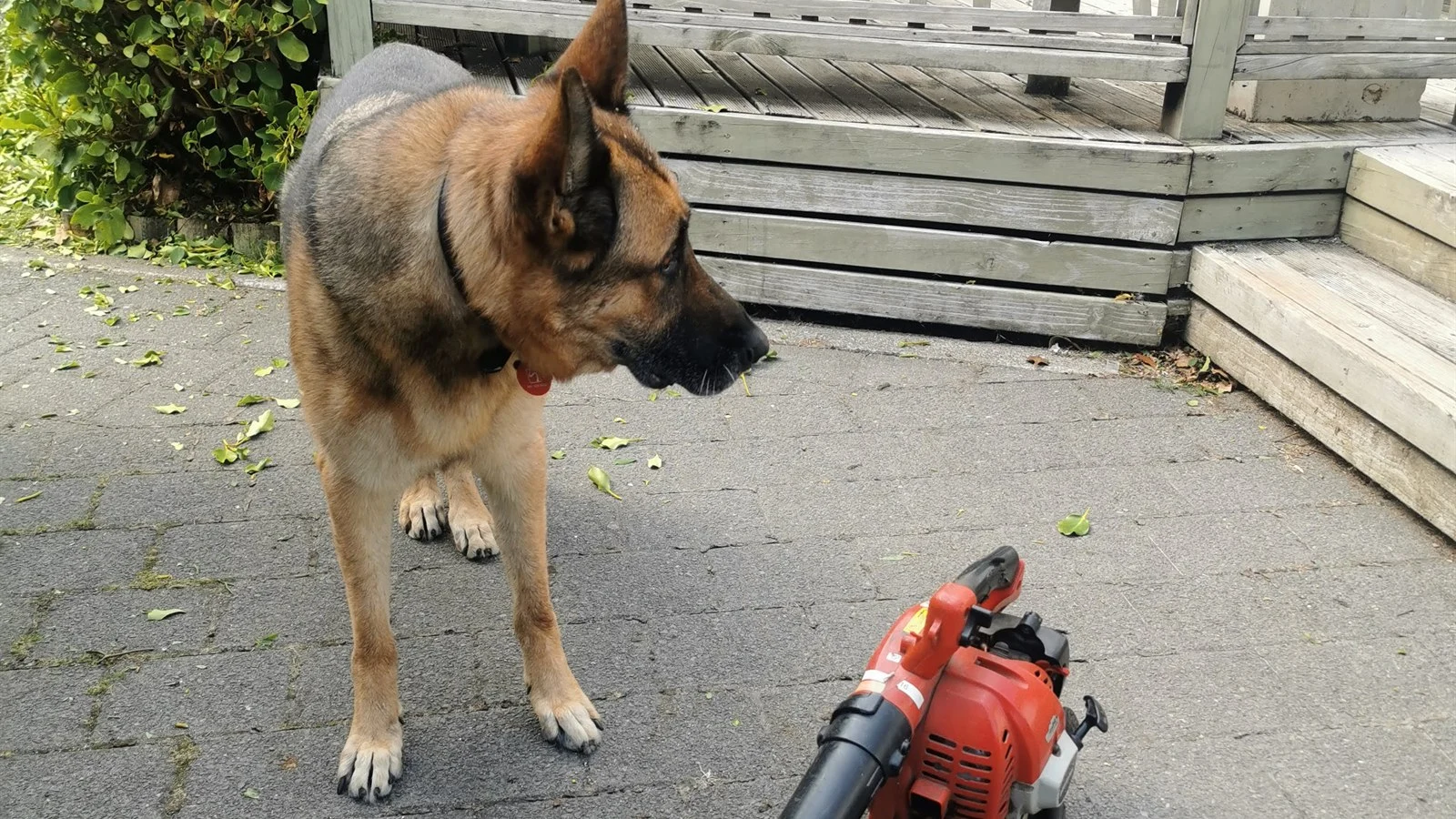
Software companies want you to send a reminder to every customer before every visit. Do not. The reminder goes to the customers who have to do something before I arrive. Unlock a gate. Move a car. Bring the dog in.
Hi, [Your Name] here from [Business Name]. Just a quick reminder that we will be around to mow your lawns tomorrow. Thanks.
That is the whole text. It goes the night before, only to the customers who need it. For everyone else it would just be noise, and noise is how customers stop reading your texts. Then the one that matters, the payment text, gets ignored with the rest.
More: How to Effectively Communicate With Your Lawn Care Customers
Do today: go through your customer list and mark the ones with a gate, a dog or a car on the lawn. They get the reminder. Nobody else does.
5. The running late text
Callers ring me because their last lawn guy stopped turning up. It is the reason I hear most often. Turning up when you said you would wins more work than any advert, and when you cannot turn up, saying so wins the next best thing, which is trust.
Hi, [Your Name] from [Business Name]. Running behind today so I will be at your place [tomorrow morning / after lunch] instead. Sorry about that.
Send it before they notice, not after. If I am ten minutes late I text ten minutes out. If it is rain, a breakdown or I am sick, the text goes out first thing in the morning to everyone on that day’s list.
More: How to mow lawns on a rainy day and Lawn Care Customer Slippage: Retain Your Valuable Customers
Do today: put this text in your notes with the two time options already typed. On a wet morning you want to be sending it in thirty seconds, not writing it.
6. The payment text the same day
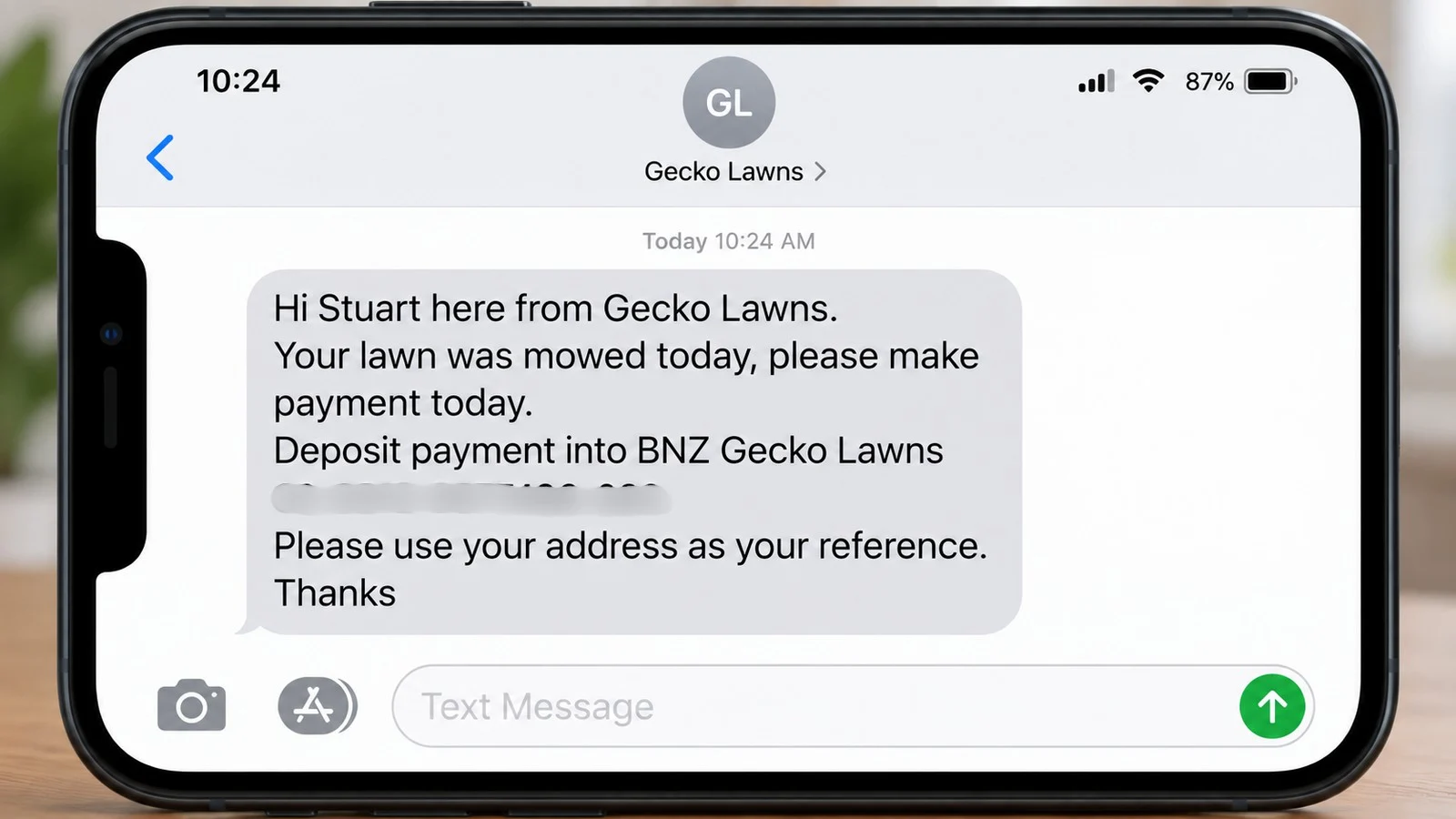
This is the text that keeps the business alive. It goes out the day the lawn was mowed, every time, no exceptions.
Hi, [Your Name] here from [Business Name]. Your lawn was mowed today; please make payment today. Deposit payment into [Bank Account Name and Number]. Please use your address as your reference. Thanks.
I used to have no payment system at all. I thought if you did the work the money came in. It does not. I watched a contractor fall three months behind on a dozen jobs, and it changed how I run things. The rules that came out of it:
- The bank details go in every payment text, not just the first one. Nobody scrolls back to find them.
- No cash. There is no paper trail and it does nothing for your bank history when you want a vehicle loan.
- Never let the total money owed to you pass one week’s income. That is the line.
I send it in the evening, around the time people sit down with their phone. Most people pay it within a day.
More: Are your customers paying on time?
Do today: if you have been invoicing at the end of the month, stop. Text tonight for every lawn you mowed today.
7. The overdue text after three days
Three days after the payment text, if nothing has arrived, this one goes.
Hi, [Your Name] from [Business Name]. Payment hasn’t come through on my end for your mow on [Date]. Could you please check that and get back to me? Thanks.
Notice what it does not say. It does not say they have not paid. It says the payment has not come through on my end. Most of the time they simply forgot, and this lets them fix it without feeling told off. If you use software, let it send this one and blame the system.
Ask twice. If it is still unpaid after the second ask, the next mow does not happen until it is. I do not argue and I do not go to a debt collector for a $45 lawn. I stop mowing and move on.
More: How to Effectively Handle Difficult Lawn Care Customers
Do today: check what is owed to you right now. Anything over three days old gets this text tonight.
8. The review text after the first mow
The best time to ask for a review is when the lawn looks its best and they have just paid. That is the first mow for a new regular, or the one-off you know they were happy with.
We have finished your lawn and booked you in for a regular cut as requested. If you have time and would like to leave a review you can use this link: [Google review link]. [Your Name] from [Business Name].
For a one-off it changes slightly:
We have finished your lawn. If you ever need us again, just let me know. If you have time and would like to leave a review, you can use this link: [Google review link]. Thanks again, [Your Name] from [Business Name].
Put your name in it. A review request from a person gets acted on. One from a business does not. And send the direct link, not “search for us on Google”.
This text, one customer at a time over years, is how my own listing got to 87 Google reviews. I have never bought one.
More: How to Get Google Reviews for Lawn Care: How I Got to 87
Do today: get your Google review link from your Business Profile and paste it into this text. Send it to the next new customer you mow.
9. The text that turns a one-off into a regular
Most operators mow a one-off, get paid, and forget them. I set a reminder for two weeks later and send this:
Hi, [Your Name] from [Business Name]. I mowed your lawn a couple of weeks ago and just thought that I would let you know that if you wanted it done again this week, it would be $[Price].
A lot of them say yes. Then I send it again two weeks after that. I call it the rule of three: once a customer has booked a one-off three times in a row, they nearly always agree to go regular, because they have just found out they like not mowing.
That is a new regular customer for the price of one message, from someone who has already paid you. It beats any advert.
More: Upselling Lawn Care Customers Can Unlock More Profits
Do today: list every one-off you have mowed in the last month. Send this text to each of them.
The one text I have already written up
There is a tenth text, and it might be the most valuable one. It is the one that puts a customer’s price up. I raise one lawn a week, the lowest paying or the furthest from home, by text, early in the week. Yes means a pay rise. No means I replace that slot from the next good lead.
I have written the full version, with what to say when they push back, in its own post. Read it after this one.
More: Lawn Care Price Increase Letter: The One I Actually Send
The pattern behind all nine
Every one of these texts does the same three things.
It has your name and your business name in it, so a stranger’s number turns into a person they know. It has the address or the date in it, so there is never a “which lawn?” conversation. And it asks for one thing, so they can answer it with one word.
There is no clever wording. The reason these work is that they were written by someone who had to get paid on Friday.
Once you have all nine saved, a customer’s whole life with you runs off your phone. Quote, book, mow, get paid, get reviewed, go regular, and eventually pay more. No app, no subscription, no admin night.
Frequently asked questions
Do I need lawn care software to send these texts? No. Every text in this post can be sent from the messages app on your phone. Save them as notes, fill in the brackets, send. I mostly just text my residential customers. Software starts to pay for itself when the round is big enough that the reminders and payment texts are eating your evenings.
Should I text or call lawn care customers? Text for anything with money in it. A quote, a payment request, a price rise. It gives them room to think and it gives you a record. Call when they call you, and answer within three rings.
How soon should I send the payment text after mowing? The same day, in the evening. Put the bank details and the address reference in every one. If it has not arrived after three days, send the overdue text. Ask twice, then stop mowing until it is paid.
Should I ask for payment before mowing a lawn? For one-off jobs, yes, every time. Text the bank details, ask for the address as the reference and a receipt, and book the mow when the money shows. About 99% of genuine customers are fine with it. The ones who are not are the ones you did not want.
Should I send a reminder text before every visit? No. Only to customers who have to do something before you arrive, like unlock a gate or bring a dog in. Texting everyone every visit is how customers stop reading your texts, including the one asking for payment.
How do I get a one-off customer to go regular? Two weeks after the one-off, text them an offer to do it again this week at the same price. Repeat two weeks later. Once they have booked three in a row, ask them to go regular. Most say yes.
Is it rude to put a price up by text? No. A text gives the customer room to think and reply in their own time, which a phone call does not. Do it one lawn a week, early in the week, and give them a way out. The full wording is in the price increase letter post.
Next step
Save all nine texts into your phone tonight. Then send two of them tomorrow: the payment text to everyone you mow, and the two-weeks-later text to every one-off from the last month. That is the cheapest new business you will get all year.
If you want the whole system, the texts, the timing and the phone script that goes with them, it is in my free community of lawn care business owners. I am in there daily. I also run a Facebook group of more than 180,000 lawn care businesses worldwide, so whatever text you are stuck on, someone in there has already sent it.