
Most lawn care business problems come down to the same eight things.
I have started a lawn care business from scratch three times in 30 years.
The first time was 1999. I moved to a small town with no job, a girlfriend who is now my wife, and $1,000 left on a credit card. I spent all of it on a mower and a weed eater. Then I worked the White Pages alphabetically, ringing every number in a town of 5,000 people, asking if they wanted a free quote.
Four months later I had a full roster.
So when someone tells me the problems in this business are impossible, I know they are not. But I also know they are real. Every week I see the same eight problems, in the same order, from people who are good at mowing and struggling at business.
Here they are, and here is what I actually do about each one.
1. You cannot get enough customers
This is the number one problem, and it is not close.

The words are always the same. “I recently started a lawn care business and have been having a hard time getting clients. I have tried business cards and haven’t had any luck. “That is a real post from a real guy. There are thousands more like it.
Here is the fix. Stop hoping and start counting.
Aim for 2 new customers a week. That is 100 a year, which is a full-time business. If you close about half your quotes, you need 4 leads a week to get there. Four. That is the whole target.
Now pick one way to get those 4 leads and do it properly before you add another. Door-knocking works out at about 50 doors for 1 customer. I used to count the NOs and get excited as I got near 50, because I knew the yes was coming. Google Ads at $150 a month brings me 10 to 15 leads. Flyers used to pull 3 in 100 and now pull about 1 in 500, so I no longer lead with them.
Track where every single lead comes from. Ask every caller, “Whereabouts did you find my number?” ” Review it monthly. Kill what does not work.
More on this in 9 Ways to Get New Lawn Care Customers Fast and 21 Great Ways to Market Your Lawn Care Business.
Do today: write down your 4-leads-a-week target and the one method you are going to use for the next 30 days.

2. Nobody can find you on Google
You are relying on word of mouth. It works, right up until it doesn’t.
Here is what actually happens. A homeowner gets your name from a neighbor. They Google you. They find nothing, or they find a half-finished page. They book the guy with a website and 20 reviews instead. You never hear about it. You just quietly do not get the call.
A decent website roughly doubles your leads over having none. It does not need to be flashy. It should be one page, mobile-friendly, with your phone number clickable in the top right corner and real photos of your own work. Google loves original images. About 80% of the photos on my site are jobs I took a picture of that day.
Then set up your free Google Business Profile. Fill it out so it matches your website exactly. Get reviews on purpose; do not wait for them. Mow a few lawns free for family and friends and ask them to leave one. Your ranking starts to climb once you have 3 reviews above 3.5 stars.
That listing is free, and it is pure gold in this industry.
Full walkthrough: How to create the best lawn care website.
Do today: claim your Google Business Profile and ask 3 happy customers for a review.

3. You priced too cheap and now you are stuck
Almost everyone starts too cheap. You are nervous; you want the job, so you shave the price.
The trouble is you cannot easily go back up. A 10% discount is forever. And the cheap customer is usually the difficult one.
Here is how I price things. Quote $1 per minute of estimated job time. My minimums are $30 for a regular mow and $60 for a one-off. To take home $1,000 a week you need to turn over about $2,000, because roughly half goes to running costs. In a 40-hour week that sounds like $50 an hour, but you only get about 6.5 productive hours a day once you count driving, fuel stops, and chat. So you actually need $60 an hour to stand still.
Then use the Goldilocks test. If you are winning every quote, you are too cheap. If you are losing 4 out of 5, you are too expensive. Winning about 1 in 3 means you have it right.
When someone haggles, do not just cave. If they ask for $30 instead of $35, tell them you will have another look. Come back with $40. Let them talk you back to $35. Now $35 feels like a win to them instead of a soft spot in them.
Full method: How to Quote on Lawns, The Complete Guide.
Do today: work out your real hourly number, then ring 10 competitors over the next 10 days and get their pricing.
4. The market feels saturated
It is saturated. The barrier to entry is a mower and a ute. That is the whole reason it feels crowded.
But almost none of them are running a business. They are running a mower. They do not answer the phone, they do not quote the same day, and they turn up when they feel like it.
That is your gap.
I call it the tow truck driver mentality. Get there fast, quote it, mow it now if you can, and book the next cut before you leave. Wear a headset. Answer within 3 rings. Smile before you speak; it changes your voice. Never put a second caller on hold; let it ring and call them back with “Sorry, I was on the other line.”
You will beat bigger companies on speed every single time because they cannot turn a quote around in an hour and you can.
More on handling the calls: Dealing With Lawn Care Leads.
Do today: set a rule that every new lead gets a reply within 10 minutes during work hours.
5. You are chasing money instead of mowing
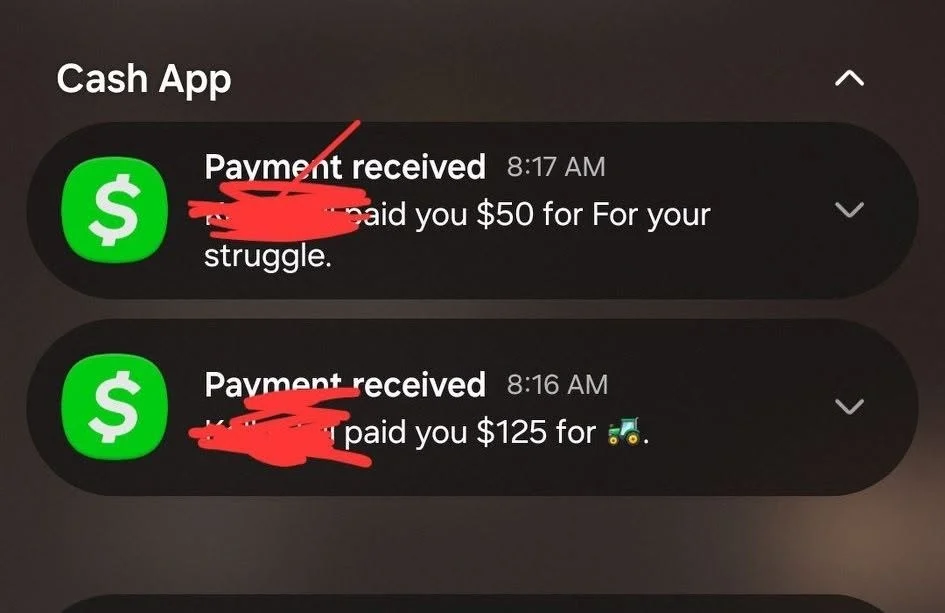
Late payers eat your week. And your evenings.
For one-off jobs I take payment up front. I text my account details, and the job gets booked once it lands. About 99% of honest customers have no problem with this. The ones who argue are usually the ones who were never going to pay.
For regulars, get clear terms out in front, invoice the same day you mow, and do not let it drift into “I’ll sort it next month.” One reminder is fine. Two is a pattern.
The bigger point is this. Most non-payment is a bad customer you accepted, not bad luck. Learn to spot them before they are on your schedule.
Read: Spot a Bad Lawn Care Customer, 11 Red Flags and Lawn Care Agreements with Customers.
Do today: move every one-off job to payment upfront, starting with the next quote you send.
6. Winter kills your cash flow
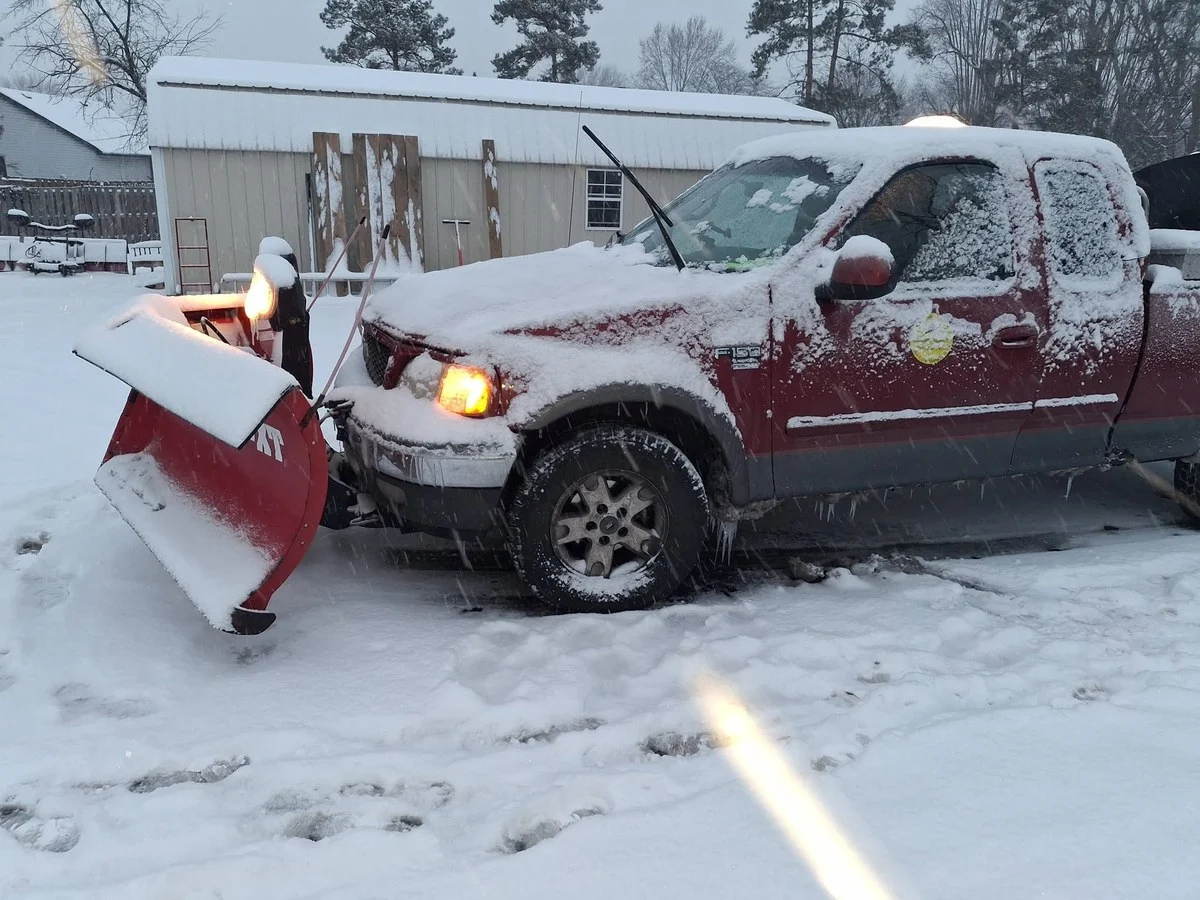
Summer is easy. Winter is where people quit.
The work drops off, the money drops off, and the bills do not. If you have not planned for it, that is the season you go back to a job.
Two things fix it.
First, budget with a 25% buffer and put money aside during the good months for the quiet ones. My rough split is 10% tax, 40% running costs, 50% wages. Know your numbers before you need them.
Second, add winter work. Garden tidy-ups, hedges, gutter cleaning, leaf removal, and depending on where you are, snow removal or holiday lights. An existing customer is about 50% more likely to buy another service than a stranger is to buy their first. So sell to the people already on your run.
More: How do you manage those winter lawns and Upselling Lawn Care Customers.
Do today: list the extra services you could sell to your current customers and pick one to offer this week.
7. You are turning work away for no reason
You get calls for tree work, hedges, rubbish removal, and lawn treatments. You do not do those, so you say no.
That is money in the bin, and it damages the relationship. People remember the guy who said no.
Build a referral list instead. Talk to the contractors you bump into at the green dump, the mower repair shop, or the tradie parked at the same house. I got a stump grinder guy’s card in the middle of a job once and used him for years. Swap leads with the ones who are good. Two-strike rule: remind them once if they do not follow up, cut them after the second time.
At the advanced level, stop swapping and start selling. I sell pre-qualified leads for $20 each, with a rule that they must be texted within 10 minutes. That side of things is roughly 20% of my yearly turnover.
Read: Lawn mowing leads, a big mistake.
Do today: get the phone numbers of two local contractors who do work you do not.
8. You are scared to make the jump
This one never shows up on a spreadsheet, but it stops more people than anything else.
You have a wage. You have benefits. Walking away from that to push a mower feels insane.
So do not walk away yet. Keep the job. Mow on nights and weekends. Grow it until the lawn work is beating the job, then quit. That is exactly what I did, and it is what I would tell my own kid to do.
You also do not need the gear the dealer wants to sell you. A good domestic mower under $1,000 is plenty for the first year. Upgrade when you hit 80 to 100 customers, not before. If you have no money at all, start with garden cleanups. Gloves, a shovel, and a bucket cost almost nothing, and the cash from those buys your first mower.
Treat it like a full-time job from day one, even when it is 10 hours a week. That is the difference between a business and a side hustle.
Read: Starting a lawn care business with nothing and How to start a lawn care business with no money.
Do today: book one hour this weekend to knock on 20 doors.
The pattern behind all eight
Look back over the list. Almost every one of these lawn care business problems is the same problem wearing a different hat.
You are treating the mowing as the business. It is not. The mowing is the easy bit.
The business is the phone getting answered, the quote going out today, the price being right, the customer being able to find you, and the money landing in the account. Get those right, and the mowing takes care of itself.
Frequently asked questions
What are the most common lawn care business problems?
Not enough customers, being invisible on Google, pricing too cheap, a market that feels saturated, chasing late payments, winter cash flow, turning away work you could refer out, and being too scared to leave the job. Those eight cover nearly everything I get asked.
What is the hardest part of starting a lawn care business?
Getting the first 20 to 30 regular customers. After that, referrals and repeat work start doing some of the lifting for you. Before that, it is all you.
Why do most lawn care businesses fail?
Two reasons, usually together. They price too cheap to cover their real costs, and they run out of cash over winter because nothing was put aside.
Is the lawn care market too saturated to start now?
No. It is crowded with people who own mowers, not with people who run businesses. Answer your phone, give a quote the same day, and turn up when you said you would, and you are already ahead of most of them.
How many customers do I need to go full time?
Around 100 regulars is a solid full-time run for one person. At 2 new customers a week, that is one year.
Do I really need a website?
Yes. A good one roughly doubles your leads over having none, and it is where people check you out after someone recommends you.
Next step
If you want the whole thing laid out, my free group has the Google Business Profile walkthrough, a business plan template, and a free website giveaway every month.